Introduction
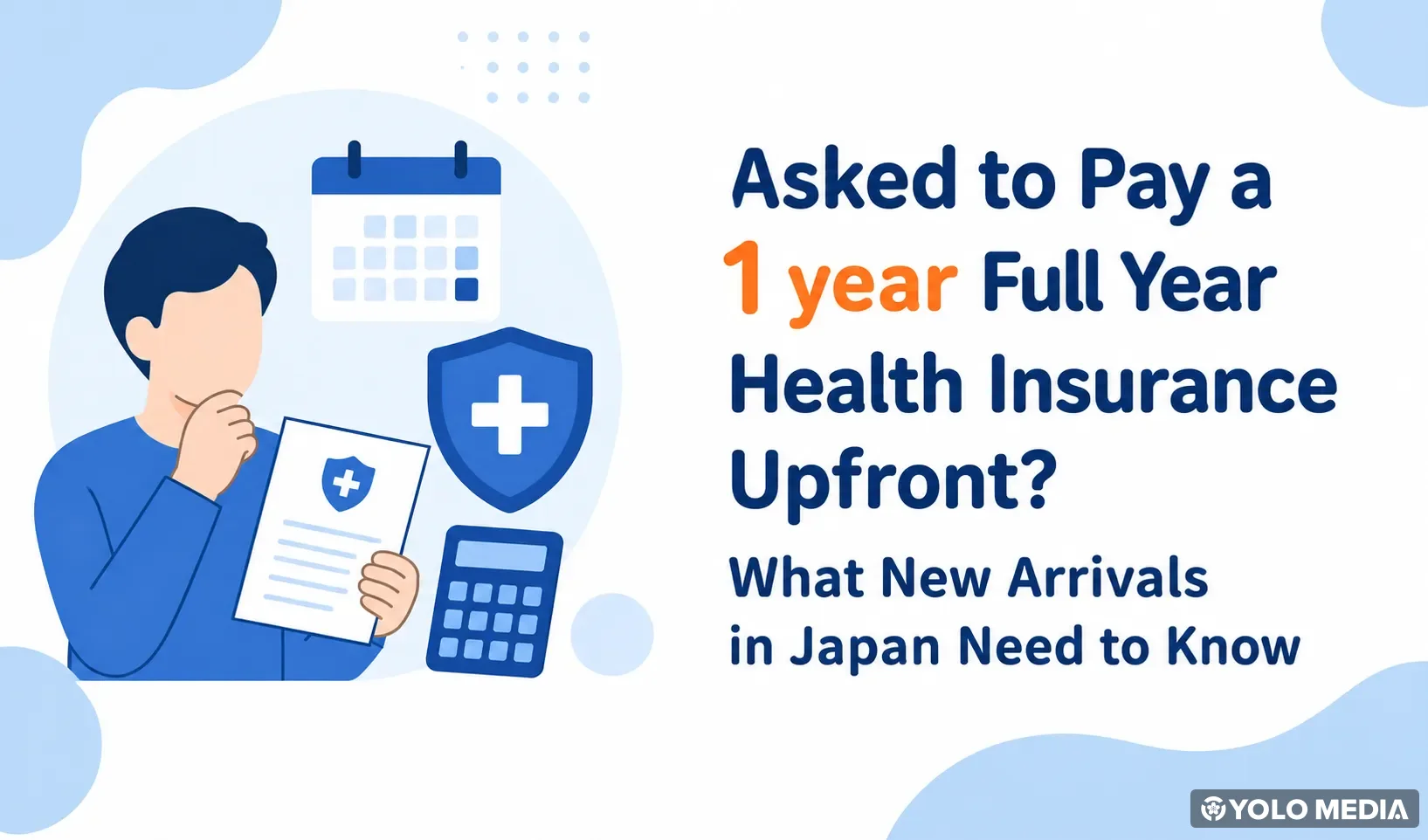
In 2026, Japan’s National Health Insurance (kokuho) prepayment rule, first piloted in Shinjuku Ward, expanded to 46 municipalities across the country. If you’ve been in Japan for less than a year and need to enroll in NHI, you may be asked to pay up to 12 months of premiums at once.
“I went to city hall to sign up for NHI and they told me to pay a full year upfront.”
That’s a lot to take in without warning. This article explains what’s going on, what it might cost you, and what you can do about it.

TL;DR
- NHI prepayment rule expanded to 46 municipalities across Japan (2026)
- Applies when enrolling in NHI within your first year in Japan
- Up to one full year of premiums may be due at the time of enrollment
- Low-income households may qualify for an automatic 70% reduction
- If you’re covered by your employer’s health insurance, this does not apply
- Unpaid NHI premiums may affect your visa renewal review
This article is based on reporting from Nikkei Shimbun as of June 12, 2026. Policy details vary by municipality. Please confirm the latest information with your local city or ward office.
First, the Most Important Point: This Is Not a Penalty
This rule applies regardless of nationality — anyone who has been in Japan for less than a year is subject to it, including Japanese nationals moving to a new city. It’s a measure to prevent unpaid premiums, not a penalty or form of discrimination.
The prepayment rule applies to everyone who has been in Japan for less than a year. It is not targeted at any specific nationality or background.
One more thing worth knowing: if you have no income from the previous year in Japan, your NHI premium is based on a flat per-person amount only (kintou-wari). With automatic low-income reductions on top of that, the actual upfront cost is often lower than you might expect.
Who Is Affected, When, and Where
| Item | Details |
|---|---|
| Covered municipalities | 46 across Japan (as of 2026 — may expand further) |
| Who is affected | Anyone enrolling in NHI within their first year in Japan |
| Who is exempt | Those on employer health insurance; residents of 1+ year |
| What’s required | Up to 12 months of premiums, paid upfront or in installments |
How to check if your city is covered:
The full list of participating municipalities has not been officially released yet. The most reliable way is to call the NHI counter at your local city or ward office and ask: “Does the prepayment rule (maebara seido) apply here?”
(Source: Ministry of Health, Labour and Welfare — National Health Insurance)
Why This Policy Exists
In Japan, company employees are covered by employer health insurance. Everyone else (students, freelancers, self-employed workers, part-time workers) enrolls in NHI. Some municipalities have seen higher rates of unpaid premiums from people who enrolled shortly after arriving and left before the coverage period ended.
The prepayment rule is a response to that risk. Shinjuku Ward ran it as a pilot, saw positive results, and the policy expanded to 46 cities in 2026.
(Source: Nikkei Shimbun)
Getting Ready: What to Know Before You Show Up
How Much Will It Be?
NHI premiums are made up of two components:
- Flat per-person amount (kintou-wari): A fixed fee per household member, regardless of income
- Income-based amount (shotoku-wari): A percentage of your previous year’s income in Japan
If you have no Japan-sourced income from the prior year, the income-based portion is zero — only the flat amount applies. With low-income reductions, monthly premiums in Tokyo typically run ¥1,000–¥3,000 (around ¥12,000–¥36,000 per year).
| Household income level | Reduction |
|---|---|
| Lowest (approx. ¥430,000 or below) | 70% off |
| Lower-middle | 50% off |
| Low | 20% off |
Before heading to the office, call ahead and ask: “Can you estimate my prepayment amount including any reductions?” It takes two minutes and means no surprises on the day.
What to Bring
- Residence Card (Zairyu Card) or Special Permanent Resident Certificate
- Passport
- My Number Card (or My Number notification letter)
- Proof of current address (rental contract, etc.)
No income documentation from the previous year? That’s fine. If you just arrived and have no prior income in Japan, the office will process your enrollment with income listed as zero. Call ahead if you’re unsure what to bring.
If You Can’t Pay the Full Amount Upfront
Not having the full amount ready doesn’t mean you’ll be turned away. Be upfront with the staff about your situation. Depending on the municipality, you may be able to arrange installment payments or a temporary deferral.
Unpaid NHI premiums can come up during visa renewal (zairyu shikaku renewal) assessments. If paying is difficult, don’t let it slide — contact the office early and ask about your options.
For a broader look at how taxes and social costs are changing in 2026, see Japan’s Resident Tax Reform: Big Changes from June 2026.
FAQ
Q. I’m on my company’s health insurance. Does this affect me?
A. No. If you’re enrolled in employer health insurance (kyokai kenpo, kumiai kenpo, or public sector equivalents — insurance provided through your workplace), you’re not in the NHI system and this rule doesn’t apply to you.
Q. What about students?
A. Students working part-time only are not covered by employer health insurance, so they need to enroll in NHI. If you’ve been in Japan less than a year, you may be subject to the prepayment rule. That said, students with low income often qualify for the 70% reduction, which brings the actual cost down significantly.
Q. Can I reduce or waive the premium?
A. Yes. Households with low income receive an automatic reduction of 70%, 50%, or 30%. If you’ve lost your job or experienced a significant income drop, you can also apply for an additional exemption. Ask at the NHI counter before you enroll.
Q. After a year in Japan, do I no longer have to prepay?
A. In most cases, once you’ve established a residency track record, you transition to the standard monthly billing cycle. Confirm with your local office for specifics.
Q. If I leave Japan early, can I get a refund on unused months?
A. Potentially yes. Premiums paid for unused months can be refunded under certain conditions. Notify your city or ward office’s NHI counter before leaving Japan to start the process.
Key Takeaways
- ✅ Japan’s NHI prepayment rule now covers 46 municipalities (2026)
- ✅ Applies to anyone enrolling in NHI within their first year in Japan
- ✅ No prior income in Japan? The 70% reduction often applies — the actual cost is lower than it first appears
- ✅ Employer health insurance holders are not affected
- ✅ Can’t pay upfront? Talk to the office — don’t leave without asking about options
Before you head to city hall, call your local NHI counter first. Ask whether the prepayment rule applies and what your estimated premium would be with reductions. A quick call makes the whole process a lot smoother.
Related: Japan’s Resident Tax Reform: Big Changes from June 2026 / Record Number of Non-Japanese Residents in Japan / Yen at 159 After Government Intervention: What It Means for Sending Money Home / Foreign Worker Notification Reform: 30,000 Yen Penalty for Missed Filings
![Using Crypto to Send Money Home from Japan? What the 55%→20% Tax Reform Means for You [2026]](https://media.yolo-japan.com/wp-content/uploads/2026/06/crypto-tax-reform-2026-en-768x403.webp)