Introduction
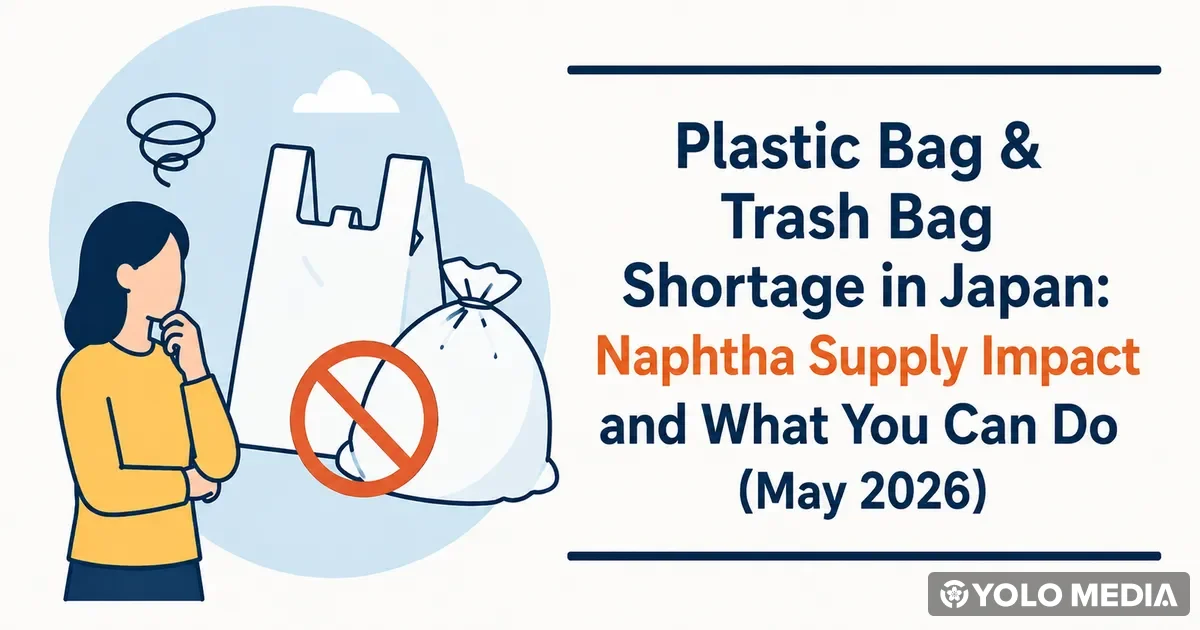
You walk into the supermarket, head to the meat section, and the roll of free plastic bags is just… gone. You try to buy trash bags, but the shelves are nearly empty, with a “limit 2 per customer” sign taped to the rack. If this has happened to you recently, you’re not imagining things.
The cause is a shortage of naphtha, the raw material used to make plastic, triggered by growing tensions in the Middle East. The impact may extend beyond plastic bags to food trays, cling wrap, and plastic products across the board.
This article breaks down what’s happening, what to do about trash disposal, and how this hits your household budget.


What You’ll Learn
- Why plastic bags and trash bags are disappearing from stores
- What local governments are doing about designated trash bag shortages
- How much prices are going up and the impact on household costs
- What the outlook is, and what you can do right now
Disclaimer: This article is based on announcements from METI, JETRO, and local governments as of April–May 2026. The situation is evolving and varies by region.
What’s Happening? Why Plastic Bags Are Disappearing
The Raw Material Problem: Naphtha Shortage
Naphtha is a chemical feedstock made from crude oil. Nearly all the plastic products you use daily — trash bags, food trays, cling wrap, plastic bottles — are made from naphtha.
Japan imports about 74% of its naphtha from the Middle East. In 2026, escalating tensions disrupted shipping through the Strait of Hormuz, causing a sharp drop in naphtha imports.
(Source: JETRO Biz News — March petrochemical production decline)
Domestic Production Has Dropped Significantly
With raw materials running low, Japan’s domestic plastic production fell sharply in March compared to the previous year.
| Product | Year-on-Year Change |
|---|---|
| Ethylene | Down 39% |
| Low-density polyethylene | Down 41% |
| High-density polyethylene | Down 62% |
| Polypropylene | Down 28% |
(Source: JETRO Biz News — March petrochemical production decline)
Manufacturers have imposed order limits and indefinite delivery delays, meaning stores simply can’t restock as usual.
(Source: Housou Gijutsu Net — Naphtha shortage impact)
Supermarkets Pulling Free Plastic Bags
Across Japan — starting in Hokkaido and spreading to other regions — supermarkets have removed the roll-type plastic bags from meat and fish sections. Many stores still bag perishables at the register, but the self-serve rolls are gone.
Trash bags are also running low on store shelves, with some shops limiting purchases per customer.
Can’t Find Designated Trash Bags — What Local Governments Are Doing
Some municipalities have temporarily relaxed their trash bag rules in response to the shortage.
| Municipality | Response | Period |
|---|---|---|
| Osaki City area, Miyagi (1 city + 4 towns) | Allowing store-bought clear or semi-transparent bags (30–45L) | From April 20, 2026, ~1 month |
| Ryugasaki City, Ibaraki | Allowing store-bought clear, semi-transparent, or milky-white bags when designated bags are unavailable | April 27 – June 30, 2026 (may be extended) |
Check your local government’s website to see if trash disposal rules have been temporarily changed. Many municipalities are announcing interim measures.
If you live in an area that requires designated trash bags and can’t find them, calling the waste collection office directly is the most reliable option. For a broader overview of how trash disposal works in Japan, see our Complete Guide to Garbage Disposal Rules in Japan.
How Much Are Prices Going Up?
Price increases on plastic bags and related products have already begun.
- Trash bags and food storage bags: 30%+ price increase from late May 2026 shipments. A 50-pack of 45L bags is expected to cost ¥100–200 more
- Polyethylene resin: Major manufacturers announced price hikes of ¥90/kg or more
(Source: Nomura Research Institute — Consumer price increases are already underway)
The price increases may not stay limited to trash bags. Food trays, cling wrap, detergent bottles, shampoo bottles — anything using plastic could be affected. For a family of four, one estimate puts the potential annual increase from plastic-related price hikes alone at approximately ¥18,000 to ¥26,000.
(Source: Nomura Research Institute — Consumer price increases are already underway)
What’s the Outlook?
As of May 2026, the root cause — disrupted shipping through the Strait of Hormuz — remains unresolved.
However, the government is taking steps.
- Alternative sourcing: Naphtha imports from outside the Middle East (US, Algeria, Peru) are being ramped up. Non-Middle East imports are expected to roughly triple by May
- Reserves: Japan has approximately 4 months’ worth of chemical product inventory secured
(Source: JETRO Biz News — March petrochemical production decline)
A drastic worsening appears unlikely, but a full return to normal will take time.
What You Can Do Right Now
1. Don’t Panic-Buy
Inventory exists. Panic buying is the biggest factor making shortages worse. Buy only what you need.
2. Check Your Local Government’s Trash Rules
Visit your municipality’s website. Temporary rules may allow regular store-bought bags instead of designated ones.
3. Use Reusable Bags
With free plastic bags disappearing from supermarkets, insulated bags or reusable zip bags that you can wash and reuse come in handy.
4. Review Your Household Budget
Plastic-related price increases are spreading across everyday products. Check our Real Cost of Living in Japan (2026 Edition) for a broader look at where you can cut costs.
Drugstore and home center private-brand (PB) trash bags tend to stay in stock longer than national brands. Before visiting multiple stores, check the PB options first.
FAQ
Q. Is this related to the plastic bag fee that started in 2020?
A. No. The 2020 policy made checkout bags paid, but today’s issue is different. A shortage of naphtha (the raw material) is causing even free roll-type bags and store-bought trash bags to run low.
Q. How long will the trash bag shortage last?
A. There’s no clear timeline yet. As long as the Strait of Hormuz shipping issue remains unresolved, this could continue for months. That said, alternative sourcing is ramping up, so a rapid worsening is unlikely.
Q. Will my trash be collected if I don’t use the designated bag?
A. It depends on your municipality. Some have announced temporary measures allowing regular clear bags. Check your local government’s website or call the waste collection office.
Q. Will food prices go up too?
A. Possibly. Rising costs for food trays and packaging film could be passed on to food prices. Products with heavy plastic packaging — bento boxes, prepared foods, cup noodles — are likely to feel the impact first if this happens.
Key Takeaways
- ✅ Check your municipality’s website for temporary changes to trash disposal rules — some areas now allow store-bought bags
- ✅ Don’t stockpile trash bags. Inventory exists, and panic buying makes the shortage worse
- ✅ Plastic-related price increases may continue for several months and could spread to other daily goods. Start reviewing your household budget early
- ✅ Keep an eye on METI announcements and your local government’s website for the latest updates