Introduction
One of the most beautiful things about living in Japan is how the changing seasons aren’t just marked by dates on a calendar, but are deeply felt through specific foods, events, and the very air in the streets.
Have you ever noticed how convenience store shelves suddenly turn completely pink with cherry-blossom-flavored sweets in early spring? In this guide, we’ll introduce the major Nenchu Gyoji (annual events) and seasonal traditions you’ll encounter during your stay. Knowing these will make your daily life in Japan even more vibrant!
TL;DR
- Japan’s four seasons each offer unique traditional events, seasonal foods, and atmosphere.
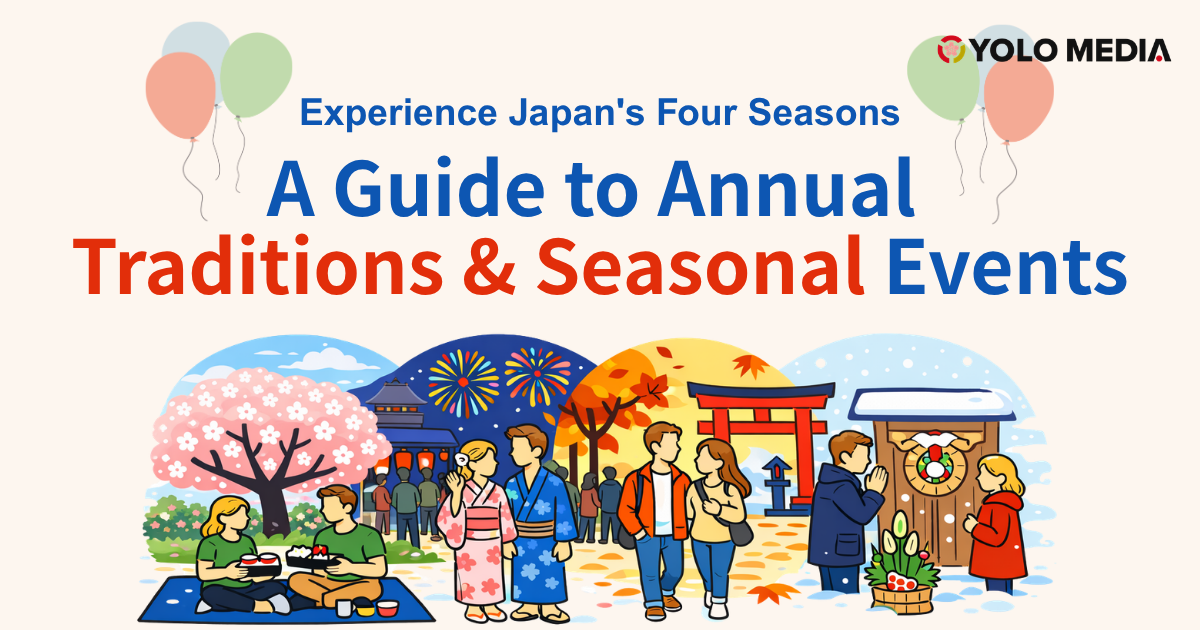
- Spring: Time for Hanami (cherry blossom viewing) and Hina Matsuri. Picnicking under sakura to celebrate the new season.
- Summer: The season of Obon and summer festivals(Matsuri). Welcoming ancestral spirits with Bon Odori dancing and fireworks.
- Winter: The most important period featuring Oshogatsu(New Year) and Setsubun. A time for family and visiting shrines (Hatsumode).
- Foreigner Friendly: Locals warmly welcome newcomers participating in community festivals and traditions.
Spring Traditions (Spring)
Hina Matsuri (Doll Festival): March 3
- How to enjoy: It’s common to eat Chirashi-zushi(scattered sushi), colorful Hina-arare(sweet rice crackers), and clam soup. You can find these easily in supermarkets and convenience stores.
- Top Spots: Shrines and historic buildings across Japan (like the Katsuura Big Hina Matsuri in Chiba) display thousands of dolls in breathtaking arrangements.
A traditional event to pray for the healthy growth and happiness of young girls. Families display beautiful traditional dolls called Hina Ningyo in homes or public spaces.
Hanami (Cherry Blossom Viewing): Late March – Early April
Hanami is the classic spring picnic where people gather under the blooming Sakura (cherry blossoms) to eat, drink, and socialize. It’s one of the events many Japanese people look forward to most all year.
- Local Tip: Spread a blue plastic tarp (leisure sheet), bring an Obento and some beer, and relax. Don’t miss Yozakura(night blossoms), where the trees are lit up for a completely different, mystical vibe.
The blossoms only last for 1-2 weeks, and Japanese culture finds deep beauty in this \”fleetingness\” (Hakanasa). Seeing the petals dance in the wind like a blizzard of flowers (Hanafubuki) is truly magical.
Famous Hanami Spots:
Golden Week: Late April – Early May
- April 29: Shōwa Day
- May 3: Constitution Memorial Day
- May 4: Greenery Day
- May 5: Children’s Day (Celebrating boys’ growth; people fly Koinobori—carp streamers—in the sky).
A string of consecutive national holidays and one of Japan’s longest vacation periods. The weather is great, and many outdoor festivals and food events are held nationwide.
⚠️ Watch Out: Shinkansen and hotels are booked months in advance. The entire country becomes extremely crowded. If you plan to travel, book as early as possible!
Summer Traditions (Summer)
Tanabata (Star Festival): July 7
- How to enjoy: You’ll see bamboo decorations in train stations and shopping malls. Try writing \”I want to master Japanese!\” on a tanzaku and hanging it up.
- Top Spots: The Sendai Tanabata Festival(August) and Shonan Hiratsuka Tanabata Festival are famous for massive, decorative paper ornaments that look like high-quality stained glass.
Based on a romantic legend of two lovers as stars who meet only once a year across the Milky Way. People write wishes on colorful strips of paper (Tanzaku) and hang them on bamboo branches.
Obon (Ancestor Festival): Mid-August
- How to enjoy: This is the time for Bon Odori. These are traditional dances around a central wooden tower (Yagura). Jumping in and dancing is warmly encouraged!
- Top Spots: The Awa Odori in Tokushima is Japan’s largest dance festival. The Gozan no Okuribi in Kyoto (giant fires lit on mountains) marks the end of Obon in a mystical way.
- Relatable Moment: Walking around at sunset during Obon and smelling incense or hearing the unique cry of the Higurashi (evening cicada) triggers a deep sense of nostalgia for Japanese people—and soon, for you too. This is something many foreigners living in Japan deeply empathize with.
Obon is a Buddhist event where ancestral spirits are believed to return home. It’s the second biggest holiday after New Year. It blends quiet remembrance with lively community energy.
Hanabi Taikai (Fireworks Festivals): July – August
- How to enjoy: Rent a Yukata(light summer kimono) and grab some takoyaki or shaved ice from a Yatai(food stall) for the authentic experience.
- Top Spots: The Nagaoka Fireworks in Niigata and the Omagari Fireworks in Akita are considered the top tier in Japan and are worth seeing at least once in your life.
Japanese fireworks aren’t just loud; they are precision-calculated art pieces by world-class pyrotechnicians set to music.
Autumn Traditions (Autumn)
Jugoya (Moon Viewing): Mid-Sept – Early Oct
- How to enjoy: Decorate with pampas grass and eat Tsukimi Dango (moon rice dumplings). Even fast-food chains sell \”Tsukimi Burgers\” (with an egg representing the moon), which has become a modern autumn tradition.
Also known as \”The Mid-Autumn Moon.\” It’s a day to appreciate the brightest moon of the year and give thanks for the autumn harvest.
Koyo (Autumn Leaves): Late Oct – November
- How to enjoy: Hiking or soaking in an Onsen while looking at the colored mountains is the ultimate autumn refresh.
- Top Spots:
Autumn’s version of Hanami is Momijigari (Autumn leaf hunting). Mountains and temples across the country turn brilliant shades of red, orange, and gold.
Halloween: October 31
- Top Spots: The Shibuya Scramble Crossing becomes a giant (and crowded) costume party (Note: Respect local rules and manners). Also, the Halloween Horror Night at Universal Studios Japan (USJ)is extremely popular.
While not traditional, Japan’s Halloween has evolved into a massive adult cosplay event rather than a children’s “trick-or-treat.”
Winter Traditions (Winter)
Oshogatsu (New Year): Dec 31 – Jan 3
The most important holiday in Japan. While the West focuses on Christmas for family, in Japan, Christmas is for friends/couples, and Oshogatsu is for Family and Tradition.
- New Year’s Eve (Omisoka – Dec 31): People eat Toshikoshi Soba(Year-crossing noodles) for longevity. At midnight, temples strike the Joya no Kane(temple bell) 108 times to cleanse the world’s 108 worldly desires.
- New Year’s Day (Gantan – Jan 1): Watching the first sunrise (Hatsuhinode) and eating Osechi Ryori<—beautiful, symbolic food in boxes. Children look forward to receiving Otoshidama(pocket money).
- How to enjoy: Return old amulets, buy a new one, and draw an Omikuji(fortune slip). It’s common to put a 5-yen coin(Go-en = for good connections) into the offering box.
- Top Spots: Meiji Jingu (Tokyo), Naritasan (Chiba), and Fushimi Inari (Kyoto) draw millions, but a quiet visit to a small local shrine is also lovely.
Hatsumode (The First Visit):
Visiting a shrine or temple for the first time to pray for luck in the new year.
Setsubun: Around Feb 3
- How to enjoy: Throw roasted soybeans while shouting \”Oni wa soto, fuku wa uchi!\” (Demons out, luck in!). Also, eating a whole Ehomaki(thick sushi roll) in one go while facing the year’s lucky direction in total silence has become a huge trend. Try buying one at a supermarket on the night of Setsubun!
A day to mark the end of winter and the start of spring (Risshun).
FAQ
Q: Is it okay for foreigners to join local events?
A: Absolutely! Community festivals (Matsuri) and Bon Odori are open to everyone. Locals are usually very happy to see newcomers showing interest in their traditions.
Q: Which events can I enjoy alone?
A: Autumn leaf walks (Koyo) and New Year’s visits (Hatsumode) are perfect for solo exploration. Also, trying seasonal foods like \”Sakura Mochi\” or \”Ehomaki\” from a supermarket is an easy way to feel the season.
Key Takeaways
- ✅ Seasonal connection: Japanese traditions are all about noticing and celebrating the changes in nature.
- ✅ Jump in: Don’t just watch the summer Bon Odori; join the circle and dance with the locals!
- ✅ New Year prep: Remember that stores might close during the first few days of January—do your shopping at the end of the year!
- ✅ Modern Events: Seasonal menu items (like Tsukimi Burgers) are a valid part of modern Japanese culture—enjoy them!
Don’t worry about knowing every rule. The most important thing is to enjoy the atmosphere and the unique flavors of the season. It will make your time in Japan unforgettable!