Category: Travel
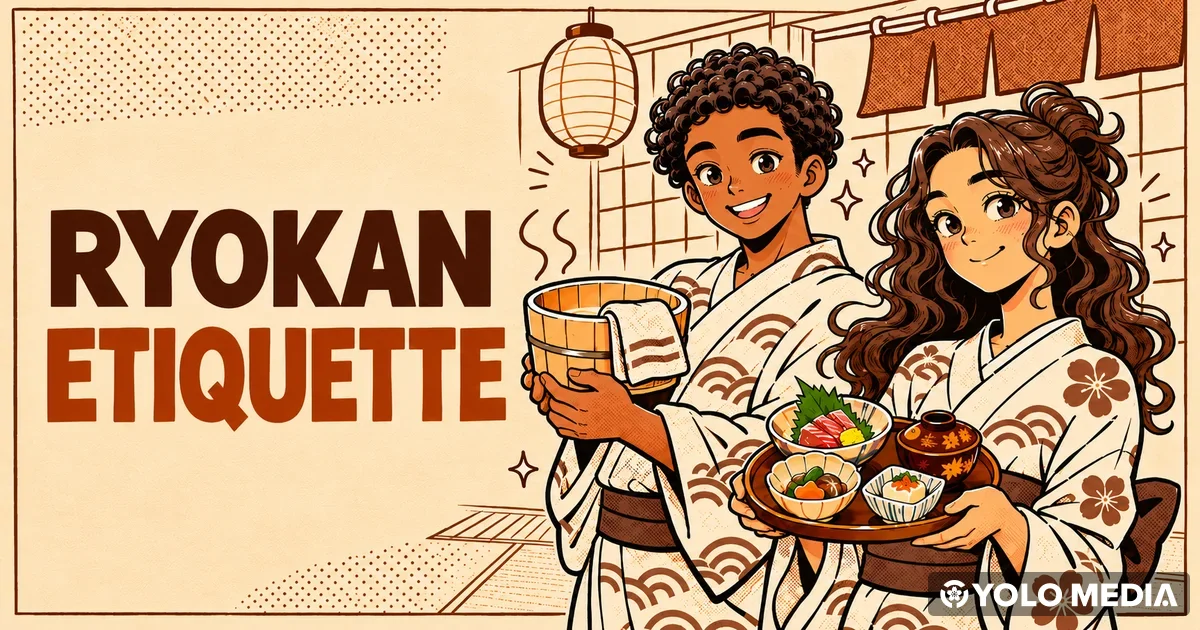
Introduction: You Can Do a Ryokan Stay Even If It’s Your First
This guide is for anyone staying at a ryokan for the first time. It covers how a ryokan differs from a hotel, the flow from arrival to checkout, yukata and onsen manners, how to eat a kaiseki (会席料理, multi-course dinner), price guidelines, and booking tips.
Sleeping on a futon in a tatami room, eating dinner in a yukata, and soaking in a hot spring: a night at a ryokan (旅館, traditional Japanese inn) is an experience that is hard to get in everyday life in Japan.
Many people hesitate to book because they worry that they’ll make a mistake or not know how to act at the onsen. If you’re unsure about something, you can ask the staff, so knowing four or five basic rules is enough to stay with confidence.
How Is a Ryokan Different from a Hotel, and What Types Are There?
A ryokan is a Japanese-style inn with tatami rooms, futon bedding, yukata, and a kaiseki dinner. A hotel is built around Western-style rooms and beds, and meals are usually separate. The way meals and hospitality are included is a major difference.
| Type | Where you sleep | Meals | Atmosphere |
|---|---|---|---|
| Ryokan (旅館) | Futon on tatami | Dinner and breakfast usually included | Staff guide you to your room and serve meals |
| Hotel (ホテル) | Bed | Extra, or breakfast only | Go at your own pace |
| Minshuku (民宿) | Futon on tatami | Dinner and breakfast often included | Family-run, simple and homey |
| Guesthouse (ゲストハウス) | Mostly dorm beds | None, or a simple breakfast | Cheap, easy to meet other travelers |
Some ryokan also have rooms with Western beds or offer plans without meals. The Japan National Tourism Organization (JNTO) puts the average price of a ryokan stay at around ¥15,000 per night, and high-end inns charge more.
(Source: JNTO, Japanese Ryokan Guide)
What Types of Ryokan Are There?
Choosing by what you want to enjoy makes it easier to avoid a mismatch.
Luxury ryokan
These focus on kaiseki dinners, private open-air baths in the room, and attentive service. They are concentrated in Hakone, Kyoto, and Izu.
Onsen ryokan
Hot springs are the main attraction. Many offer large baths, rotenburo (露天風呂, outdoor baths), and natural spring water. Kusatsu, Atami, Hakone, and Ito are popular areas.
Room-only plans
These skip meals. They suit people who want to eat out or keep costs down. Look for the word sudomari (素泊まり) in the plan name.
Solo-friendly ryokan
Some ryokan only take bookings for two or more guests, so check before you book if you’re traveling alone. More ryokan now welcome solo travelers.
What Do You Do When You Arrive, and How Do You Behave in Your Room?
It can be confusing at first where to take off your shoes, but the entrance has a raised step where you do it. Then give your name at the front desk. A room attendant (nakai, 仲居) then shows you to your room and usually serves tea and sweets.
From arrival to your room
- *Take off your shoes at the genkan (玄関)*: Place them neatly at the side or hand them to staff
- Change into slippers: Use them in the corridors and common areas
- Check in: You write your name, address, and contact details in the guest register. You are often asked at this point what time you want dinner and breakfast
- Get shown to your room: Staff explain the facilities and where the baths are
According to the Japan Tourism Agency’s FAQ, check-in at many ryokan starts at 3 or 4 p.m. Check-out is usually between 10 a.m. and 12 noon, and almost every ryokan will hold your luggage if you arrive before check-in.
(Source: Japan Tourism Agency, Ryokan FAQ)
What if you’ll be late for dinner?
Ryokan serve dinner within a set time window. If you expect to be significantly late, call the ryokan. Once the window passes, they may not be able to serve dinner. The times for dinner and breakfast are usually decided at check-in.
How Do You Behave in a Tatami Room?
You take off your slippers as well as your shoes on tatami. Leave the slippers at the entrance to the room and walk in bare feet or socks.
Using the room
The room has a low table and floor cushions (zabuton, 座布団), and the futon is stored in a closet. At many ryokan, staff lay out the futon while you’re at dinner, so coming back to a made-up bed is a common ryokan moment.
- *Don’t put your bags in the tokonoma (床の間)*: This alcove is for flowers and a hanging scroll
- Don’t drag a wheeled suitcase across the tatami: It damages the mats, so carry it or leave it in a corner
- In the morning, leave the futon as it is: Staff will put it away
What does a futon feel like?
The futon is laid directly on the tatami, so it is firmer than a bed mattress. Some people find it easy on the body. If the pillow is too low, you can roll a towel to raise it.
How Do You Wear a Yukata, and What Are the Onsen Manners?
Wear the yukata with the left side over the right, and tie the obi (帯, sash) at your waist. Right over left is how the deceased are dressed, so avoid it.
Steps
- Put the yukata over your shoulders and bring the two collars together in front of you
- Wrap the right side against your body first, then lay the left side over it (the correct direction lets you slide your right hand inside)
- Tie the obi at hip level, in front or at the side
Many people get the direction wrong, but at most ryokan the staff will show you how to put on the yukata. Don’t worry about tying the obi in a perfect shape.
Can you walk around in a yukata?
At most ryokan you can wear it inside the building. In hot spring towns, walking outside in a yukata and geta (下駄, wooden sandals) is part of the fun. Whether you can go outside in one depends on the ryokan and the area, so ask at check-in.
What do you wear under a yukata?
Underwear is fine. In cold weather, you can add a shirt underneath.
What Are the Onsen Manners?
The most important rule is to wash your body at the washing station before you get into the bath. The bath water is shared, and getting in without washing breaks onsen etiquette.
Step by step
- Undress in the changing room: Put your yukata and underwear in the basket and leave valuables in your room
- Wash your body and hair at the washing station: Many ryokan provide shampoo and body soap
- Tie up long hair: Keep it out of the water
- Get into the bath: Put the small towel on your head or leave it outside the bath, and keep it out of the water
- Wipe off lightly before leaving: This keeps the changing room from getting wet
No swimsuits
Japanese onsen are enjoyed without swimsuits. Baths are separated into men’s and women’s, and you don’t wear a towel in the water. It feels awkward the first time, but everyone is busy with their own bath, so you don’t need to worry about others.
Morning baths
Some ryokan switch the men’s and women’s baths between night and morning. You can use the other bath in the morning, so try another soak before checkout.
For more details on onsen manners, see this article.
 Culture & Society
Safe for Tattoos? Onsen Etiquette and Bathing Rules for Foreigners to Enjoy with Peace of Mind
Want to try a Japanese Onsen but feel shy about being naked or worried about tattoos? From the correct way to wash befor…
Read related article
Can You Use a Ryokan Onsen If You Have Tattoos?
It depends on the ryokan. Some onsen refuse tattoos, some allow small ones, and some let you cover them with a sticker. Asking the ryokan before you book is the safe way.
The Japan Tourism Agency’s FAQ also says that tattoo policies differ by ryokan. Some have no restrictions at all, while others decide case by case, for example by allowing one or two small tattoos. Many ryokan also have in-room baths or private baths, and guests with tattoos are said to be able to use them without trouble.
How to choose a ryokan if you have tattoos
- Tell the ryokan about your tattoos by email or phone before you book, and ask if you can use the bath
- Choose a ryokan with a room with its own onsen or a private bath you can reserve by the hour
- Look for ryokan that state they welcome guests with tattoos on their website
It is frustrating to find out after you’ve booked that you can’t use the large bath because of your tattoos. Asking takes one message, so ask first.
(Source: Japan Tourism Agency, Ryokan FAQ)
How Do You Eat Dinner and Breakfast?
Dinner is a kaiseki meal, with small dishes served in order. You may not know which dish to start with the first time, but eating each dish in the order it arrives is all you need to do.
The usual order
- Sakizuke (先付け): A small appetizer served first
- Wanmono (椀物): A clear soup
- Tsukuri (造り): Sashimi
- Yakimono (焼き物): Grilled fish or meat
- Nimono (煮物): A simmered dish
- Rice, miso soup, and pickles: The final meal of the course
- Dessert: Fruit or Japanese sweets
Tips
- Eat the rice last: If you start with it, you’ll have side dishes left over
- Tell the ryokan about foods you can’t eat when you book: It may be too late to arrange on the day
- You can hold small bowls in your hand: It’s natural to lift soup bowls and small dishes
Some ryokan serve dinner in your room, and others move you to a dining room. It varies, so check the plan description in advance.
If you have allergies or are vegetarian, say exactly what you can’t eat when you book.
For more on vegetarian and vegan meals, this article can also help.
 Food & Dining
Vegetarian & Vegan in Japan: Dashi, Phrases and Where to Eat
Eating vegetarian or vegan in Japan? Learn where fish dashi hides, which dishes are plant-based, key phrases, and how to…
Read related article
What Is Breakfast Like?
Breakfast is Japanese too, with rice, miso soup, grilled fish, rolled omelet, pickles, tofu, and other small dishes. The portions are larger than they look, so go easy at dinner.
How Much Does It Cost, Where Should You Stay, and How Do You Book?
Prices are often shown per person, and the standard plan is “1 night, 2 meals” with dinner and breakfast. Drinks such as alcohol are almost always extra.
How pricing works
- Per person is common: “¥20,000 per person” for two guests means about ¥40,000 in total
- *1 night, 2 meals (ippaku-nishoku-tsuki, 一泊二食付き)*: Lodging, dinner, and breakfast as a set
- Taxes and service charges: Besides consumption tax, some ryokan add a service charge or a bathing tax. Check the total on the booking screen, including taxes and service charges
Watch the cancellation fee
According to the Japan Tourism Agency’s FAQ, ryokan cancellation fees rise as the stay date gets closer, and a same-day cancellation costs the full price. A no-show without notice is usually charged in full too. Check the cancellation policy before you book.
(Source: JNTO, Japanese Ryokan Guide / Japan Tourism Agency, Ryokan FAQ)
Do You Need to Tip?
Tipping is not a common custom in Japan. Whether to give a kokorozuke (心づけ, a small gratuity) at a ryokan differs by inn and by person, so if you’re unsure, ask the staff at check-in.
Which Area Should You Pick?
Prices change a lot by area and by the grade of the ryokan.
| Area | Features |
|---|---|
| Kusatsu Onsen (Gunma) | Famous for the Yubatake. Many room-only and affordable onsen ryokan |
| Ito Onsen (Shizuoka) | Easy to reach from Tokyo, with many affordable ryokan |
| Kinugawa Onsen (Tochigi) | Hot spring town surrounded by nature, easy to combine with Nikko |
| Atami (Shizuoka) | Sea and hot springs, good for a weekend trip |
| Gora, Hakone (Kanagawa) | Many high-end ryokan with in-room onsen |
| Kyoto | Machiya-style ryokan that pair well with sightseeing |
Other destinations you can reach from Tokyo, including day trips, are covered in this article.
Day Trips from Tokyo
If this is your first ryokan stay, Kusatsu or Atami are good places to start with an affordable inn.
When and Where Should You Book a Ryokan?
Popular ryokan, and stays in cherry blossom or autumn leaf season, can sell out several months ahead. If you have a date in mind, book early.
The autumn leaf season and where to see the colors are covered in this article.
 Travel & Explore
Japan Autumn Leaves 2026: Peak Timing and Popular Spots
When and where to see autumn leaves (koyo) in Japan: koyo vs momiji, the 2026 forecast, spots from Hokkaido to Kyushu, i…
Read related article
How to book
- The ryokan’s own website: Plan details are thorough, and it’s easy to ask about tattoos or food requests directly
- Booking sites such as Rakuten Travel: Lets you compare many ryokan at once (check each site for English support)
- Phone or email: A reliable way if you are traveling alone, have tattoos, or have foods you can’t eat
Confirm these four points when you book to avoid trouble on the day.
- Whether you can stay alone
- Meal times, and how they handle foods you can’t eat
- Whether there’s a bath you can use with tattoos
- Check-in and check-out times, and the cancellation policy
If you’re combining a ryokan with a classic route, this article can also help.
How to Plan the Golden Route Itinerary
FAQ
What should I bring to a ryokan?
Many ryokan provide a toothbrush, towels, and a yukata, but it depends on the ryokan. Check the amenities listed on the booking page and bring only what is missing, so your luggage stays light.
Can I bring my own food and drinks?
The rules differ by ryokan. Alcohol ordered with dinner is often an extra charge, so if you want to bring something, ask when you book or at check-in.
Until what time can I use the large bath?
Each ryokan sets its own bath hours. Some split the hours between evening and morning, so ask at check-in when and where you can bathe.
Do ryokan staff speak English?
It depends on the ryokan. Some have English-speaking staff and some only speak Japanese. If you’re worried, send an English inquiry before you book and see whether you get a reply. A translation app is also reassuring to have.
Can I stay with children?
Some ryokan accept children. Age rules, and whether there are children’s meals and futon, vary by ryokan, so tell them your child’s age when you book and confirm. On price, it is common for ryokan to charge children 12 and over the same fee as adults.
(Source: Japan Tourism Agency, Ryokan FAQ)
How much does a room with its own onsen cost?
It varies a lot by ryokan and room. Such rooms often cost more than rooms with only the large bath. If you’re worried about tattoos or privacy, start by looking for a ryokan with a private bath.
Conclusion: A Ryokan Stay Is Worth Doing at Least Once
A night at a ryokan lets you experience kaiseki, onsen, futon, and yukata, the culture of everyday life in Japan, all at once. Even if you worry about etiquette, you’ll be fine if you remember three things: wash before the bath, wear the yukata left over right, and ask the ryokan first if you have tattoos.
If you’re unsure about anything, ryokan staff will explain it politely. Try an affordable ryokan in Kusatsu or Atami as an easy first step.