Last Updated: March 20, 2026
Reading Time: 18 min read
Category: Culture
Introduction
“Are those women with the white makeup Geisha? Or Maiko?”
Have you ever found yourself wondering this while walking the alleyways of Kyoto?
Geisha and Maiko are beloved worldwide as symbols of Japanese beauty and tradition. Yet despite their fame, the clear differences between the two and the reality of their daily lives are things that even long-term foreign residents of Japan often can’t answer accurately.
In this article, we’ll unravel the real differences between Geiko and Maiko from a local perspective, written for foreigners encountering Japanese traditional arts and culture. We’ll explore their daily schedules, the games they play to entertain guests, why they continue to uphold the unique Ichigensan Okotowari culture, and the essential etiquette you absolutely need to know if you’re planning a visit to Kyoto.
TL;DR
- Geiko are seasoned professionals trained in traditional Japanese performing arts
- Maiko are apprentices, typically aged 15–20, training to become Geiko
- Kyoto’s five Hanamachi (entertainment districts) are their primary base of operations
- Their kimonos and hair ornaments delicately reflect the changing seasons of Japan
- The “No First-Time Customers” policy at tea houses is not exclusion—it’s a trust-based business model built on hospitality
- Unauthorized photography or chasing Geiko and Maiko on the street is a serious rule violation
What Is the Fundamental Difference Between Geisha and Maiko?
Let’s start with the biggest mystery: the difference between the two. When you first walk through Gion, it’s completely normal to feel confused because all the women in kimonos seem to look the same. We’ve all been there!
However, when you look more carefully, you’ll notice that there are actually quite clear differences in the kimonos, obi sashes, and hair ornaments.
Geisha / Geiko
While globally known as “Geisha,” the official term used in Kyoto is Geiko.
They are professionals who have spent many years mastering traditional arts such as shamisen, classical Japanese dance, tea ceremony, and flower arrangement. They usually become Geiko after the age of 20, and their job is to entertain guests at high-end banquets called Ozashiki.
Maiko
Meaning “dancing child,” a Maiko is an apprentice training to become a fully-fledged Geiko. They are generally between 15 and 20 years old and undergo years of rigorous training. The glamorous image most tourists picture from guidebooks—with red collars, trailing sashes, and swaying hair ornaments—is actually a Maiko, not a Geiko.
Comparison Table: Spot the Difference at a Glance
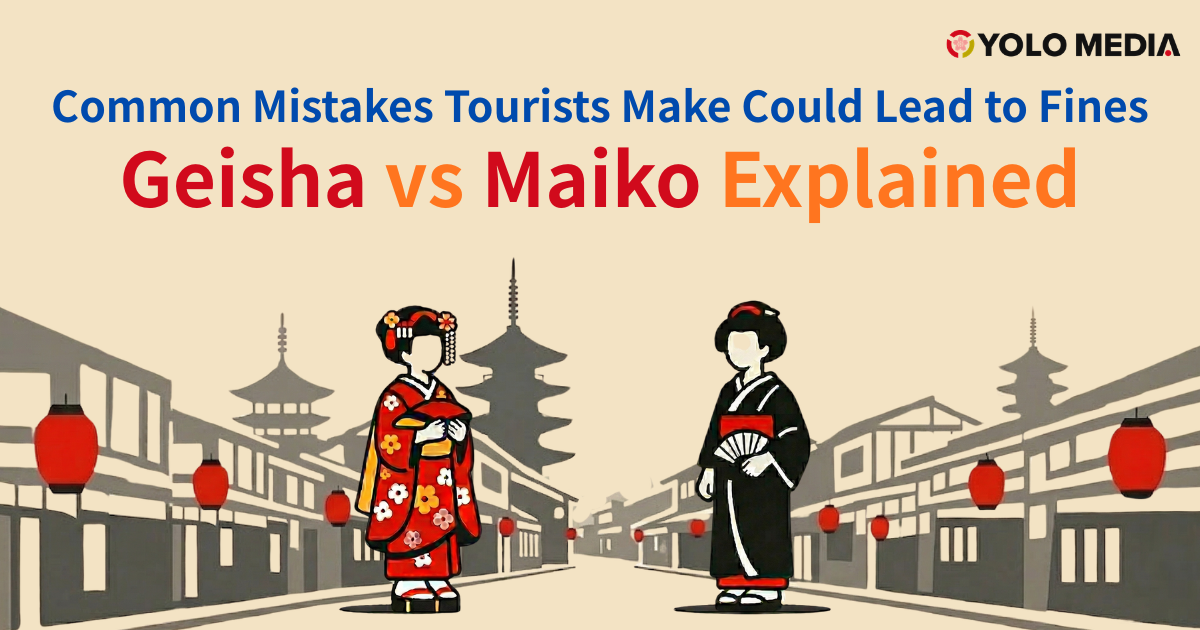
| Feature | Geiko | Maiko (Apprentice) |
|---|---|---|
| Age | Usually 20 and older | Around 15–20 years old |
| Kimono | Subdued, elegant colors | Long-sleeved Furisode with vibrant colors and patterns |
| Obi (Sash) | Compactly tied at the back (Otaiko style, etc.) | A trailing Darari-obi hanging from the back to the feet (approx. 5–7 meters long) |
| Hair | Wear a wig (Katsura) with very minimal ornaments | Style their own natural hair into complex Nihongami, adorned with lavish seasonal Kanzashi |
| Footwear | Standard, flat, easy-to-walk-in Zori sandals | Tall, thick wooden Okobo clogs, about 10cm high, that click as they walk |
(Reference: mai-ko.com)
Misconceptions About Geisha and Their True Role
Due to their mysterious allure and cultural differences, images of Geisha that don’t match reality have spread widely. However, behind the misconceptions, they are truly professionals of the arts who have undergone thorough training.
The word breaks down into “Gei” (Art) and “Sha” (Person). True to their name, they are entertainers who host guests with refined traditional arts—Japanese dance, singing, shamisen, tea ceremony—combined with polished conversational skills and cultural knowledge. They are deeply respected as “guardians of culture” who continue to preserve the beauty of Japan.
The Ochaya (tea houses) where they entertain operate on an invitation-only basis, functioning as highly exclusive and secure private spaces.
The Path from Maiko to Geiko: 4 Training Steps
Behind the gorgeous kimonos lies a long path of rigorous training. Learning about this process may change the way you see them entirely.
- Shikomi (Preparation): About 1 year. A girl around 15, after graduating middle school, moves into an Okiya (lodging house) where she lives in, doing household chores and learning Kyoto dialect (Kyo-kotoba) and strict manners. It’s not uncommon for Okiya to heavily restrict smartphone usage.
- Minarai (Learning by Observation): About 1 month. Having completed the Shikomi stage, she accompanies a senior Geiko to banquets, observing the flow of work and learning the basics of hospitality firsthand.
- Misedashi (Official Debut): This is her official debut as a Maiko. For the next 5 years, under a strong mentorship with a senior “older sister,” she spends her days attending intensive daily practice and her evenings gaining experience at banquets.
- Erikae (Turning the Collar): Around age 20, she reaches the major milestone of graduating from Maiko to Geiko. It’s called Erikae because the collar of her kimono changes from the youthful red to white, symbolizing a mature woman. From this point on, she transitions from styling her natural hair to wearing a wig.
(Reference: japan-guide.com)
Behind the Veil: A Day in Their Life
“We know they work at banquets at night, but what do they do all day?” Have you ever wondered about this?
They aren’t living a relaxed, nocturnal lifestyle. In fact, from morning practice to late-night banquets, their days are packed with activity.
- 09:00 – 12:00 (Practice Time): They attend daily lessons (Keiko) in Japanese dance, shamisen, percussion, and tea ceremony. No matter how late they get home from a banquet, they continue to refine their art under strict instructors every day except holidays.
- 13:00 – 16:00 (Preparation): After lunch, they begin preparing for the evening. For Maiko especially, preparation takes a huge amount of time. They apply their own distinctive white Oshiroi makeup and are dressed in heavy kimonos by specialist male dressers called Otokoshi.
- 17:00 – 18:00 (Heading to Work): They travel from the Okiya to tea houses and restaurants. This is the moment you spot them on the cobblestone streets of Gion.
- 18:00 – Midnight and Beyond (Entertaining): They host guests at banquets—matching conversations to the guests’ interests, livening the atmosphere with traditional games, and performing dances. They typically visit multiple Ochaya in a single evening, so it’s common for work to continue past midnight.
- 01:00 AM (Rest): After work, they remove their makeup and get to sleep around 1–2 AM. The next day, morning practice awaits again—an incredibly demanding schedule that requires serious physical and mental stamina.
Wearing the Seasons: The Secrets of Kimono and Kanzashi
If you look closely at Maiko on the streets, you’ll notice that their appearance shifts subtly with each season. The changing seasons of Japan are naturally reflected in their kimonos and hair ornaments.
Monthly Changes in Kanzashi
The Kanzashi (hairpins) adorning a Maiko’s intricate Nihongami hairstyle change their motifs strictly by month. They are linked to Kyoto’s natural scenery and seasonal events, and spotting the differences is a joy in itself.
- January: Pine, bamboo, plum, or hagoita paddles (festive New Year motifs)
- February: Plum blossoms (flowers heralding spring after the harsh winter)
- March: Rape blossoms, daffodils, peonies
- April: Cherry blossoms (the iconic symbol of Japanese spring and the most popular design)
- July: Round fans (uchiwa) and Gion Festival floats (yamahoko)
- October: Chrysanthemums (autumn symbol)
- December: Maneki signboards (wooden plaques bearing Kabuki actors’ names) from the Minamiza Theatre’s year-end performance
Kimono Fabrics Also Change with the Seasons
Kyoto summers (July–August) bring fierce heat and high humidity, but they gracefully wear kimonos made from sheer summer fabrics called Ro or Sha. While these kimonos look refreshingly cool, they still wear multiple layers of undergarments underneath. The composure they maintain—never once appearing to break a sweat in such heat—truly commands admiration.
Why “No First-Timers”? The Unique Ochaya Business System
One of the most confusing rules for foreigners in Kyoto’s Hanamachi is Ichigensan Okotowari (No First-Time Customers). Some visitors wonder, “Is it because I’m a foreigner?” In reality, this is a traditional business system designed to protect trust and the quality of hospitality.
At an Ochaya, the guest never pays for food, drinks, catered cuisine, or the Geiko’s time charge (Hanadai) on the spot. Everything is covered upfront by the Ochaya, and an invoice is sent later on a credit basis.
Because of this, accepting complete strangers unconditionally creates financial risk and potential trouble. Only when a trusted, regular customer vouches for you with an introduction does the Ochaya agree to welcome you in, confident that “this person is trustworthy.”
In other words, this isn’t about nationality. Even Japanese people cannot enter without an introduction. It’s a practical system that protects the privacy and comfort of existing guests.
The World of Ozashiki Asobi (Banquet Games)
Entertainment at a banquet isn’t just about sitting back and watching a beautiful dance. Traditional games called Ozashiki Asobi are played to create a warm, lively atmosphere. Many of these games are intuitive and transcend the language barrier, making them an exciting experience for foreign guests as well.
Tora-Tora (Tiger-Tiger)
This is like a full-body rock-paper-scissors game played across a folding screen.
The three roles are: “Watōnai” (a brave hero with a spear), “Tiger” (crawling on all fours and roaring), and “Old Woman” (trembling with a cane). Players strike their poses simultaneously from behind the screen to the rhythm of music. The hero beats the tiger, the tiger beats the old woman, and the old woman beats the hero. Accompanied by the Geiko’s shamisen and distinctive singing, the loser must drink a penalty cup of sake—guaranteeing plenty of laughter.
Konpira Fune Fune
A small beer-bottle stand (hakama) is placed between the Geiko and the guest. In rhythm to a song, players take turns reaching for the stand. If the other person takes the stand away, you must tap the table with a closed fist (“Rock”). If the stand remains, you stroke the table with a flat palm (“Paper”). The tempo ramps up to an insane speed toward the end, making it a thrilling test of reflexes—especially after a few drinks!
Kyoto’s Five Hanamachi and Where to See Geiko
“So, where should we go to see them?” This is a natural question. Kyoto has five official Geiko districts called Hanamachi:
- Gion Kobu: The largest and most prestigious district
- Gion Higashi: A smaller area near Yasaka Shrine, same as Gion Kobu
- Pontocho: A wonderfully atmospheric narrow alley stretching along the Kamo River
- Miyagawacho: A lively area close to tourist spots like Kiyomizu-dera
- Kamishichiken: The oldest and quietest district, near Kitano Tenmangu Shrine
Best Time and Place
Take a quiet walk through Hanamikoji Dori in Gion or Pontocho between 17:00 and 18:30 in the evening. This is when you’re most likely to spot authentic Geiko or Maiko hurrying on their way to evening banquets.
Essential Etiquette Every Tourist Must Follow
This is the most important section. In recent years, “Maiko paparazzi” behavior by foreign tourists visiting Kyoto has become a serious problem. Never forget that they are not cosplayers or free tourist attractions—they are professionals on their way to work.
- Don’t Block or Chase Them: They are hurrying to taxis or to venues where clients are waiting. Never make them stop.
- Don’t Take Unauthorized Photos: Since 2024, unauthorized photography on certain private roads in Gion carries a fine of up to ¥10,000. Thoughtlessly pointing a smartphone or camera at them is a serious nuisance.
- Never Touch Them: Their kimonos and hairstyles are fragile, expensive works of art that took skilled artisans hours to prepare. Pulling on a kimono sleeve is completely unacceptable.
If you happen to spot one, make space, step aside, and admire them quietly from a distance. That is the smart way to behave.
3 Ways to Experience Geisha Culture and Estimated Costs
For those of you who want more than just watching from afar, here are three realistic approaches. Even within the Ichigensan Okotowari system, there are several ways to experience the culture.
1. Join an Authentic Ozashiki Experience
Certain high-end restaurants (ryotei) and specialized agencies offer Ozashiki experience programs for foreigners. With an interpreter, you can enjoy a traditional Japanese multi-course meal, banquet games, and full-scale dance performances in a private setting.
- Estimated Cost: ¥50,000 – ¥100,000 per person
2. Watch a Seasonal “Odori” Dance Performance
The most affordable and reliable way is to purchase tickets for one of the large-scale dance performances held each spring and autumn in Kyoto’s Hanamachi (such as the Miyako Odori or Kamogawa Odori). Enjoy refined dancing alongside spectacular stage design in a proper theatre.
- Estimated Cost: ¥4,000 – ¥7,000
3. Transform into a Maiko Yourself
If you want photos alongside a Maiko, don’t chase them on the street—book a “Maiko Transformation Studio” instead. You’ll receive professional makeup and kimono dressing with no hassle, and you can freely take all the commemorative photos and videos you want.
- Estimated Cost: ¥10,000 – ¥20,000
Where to See Geisha Outside Kyoto
While Kyoto is famous, smaller Geisha communities exist in other cities as well:
- Kanazawa: The Higashi Chaya-gai and Kazuemachi districts feature beautifully preserved historic streetscapes. Less crowded than Kyoto, it’s a very attractive option for foreign visitors.
- Tokyo: In areas like Asakusa, Kagurazaka, and Shinbashi. You might spot them not only at high-end restaurants but also at large local festivals and events.
- Atami: A historic seaside hot spring resort where the Geisha tradition remains strong, particularly at hotel banquets.
FAQ (Frequently Asked Questions)
Q: Are the Maiko I saw during the daytime in Gion real?
A: In many cases, they are likely regular visitors enjoying a “Maiko Transformation Experience.” Real Maiko spend their days in rigorous practice—learning dance and shamisen—and only go out in the evening to head to banquets. Experienced Japanese people can usually tell the difference immediately by how they walk and wear their kimono.
Q: Can foreigners enter an Ochaya?
A: Generally, no, due to the strict Ichigensan Okotowari (invitation-only) policy that requires an established connection. However, more and more concierge services specializing in bookings for foreigners, as well as custom experience packages from luxury ryokan, have started to appear.
Q: Can I stop a Maiko on the street to ask for a photo—even politely?
A: No, we advise against this. When they’re rushing to work in the evening, stopping them to ask for a photo—no matter how politely—is a significant disruption. At formal events like Odori performances or paid Ozashiki experiences, there are cases where photography is freely permitted.
Q: Do I need to tip a Geiko or Maiko?
A: If you’ve booked an Ozashiki package, all service fees and Hanadai (time charges) are already included. There is no need for foreign guests to offer additional cash tips on the spot.
Q: Can men become Geisha?
A: Historically, the first “Geisha” were actually men (known as Hokan or Taikomochi). A small number of male entertainers called Hokan still exist today and are valued as professionals who can liven up a party, but the glamorous Geiko and Maiko we picture are exclusively women.
Key Takeaways
- ✅ Geiko are professional entertainers, while Maiko are young women in a demanding apprenticeship
- ✅ Starting from the live-in Shikomi stage, they dedicate years of disciplined training to carry on Japan’s traditional arts
- ✅ Their kimonos and hair ornaments are carefully selected monthly, beautifully reflecting Japan’s four seasons
- ✅ The Ochaya system of “No First-Timers” is not discrimination—it’s a system that protects trust and hospitality for regular clients
- ✅ Never chase or stop them on the street. If you want a cultural experience, attend a formal performance or visit a transformation studio
To help Japan’s beautiful traditions survive for generations to come, let’s each make the effort to understand the roots of this culture and act with respect and awareness.