Last Updated: 2026-05-19
The Rainy Season Has Already Begun
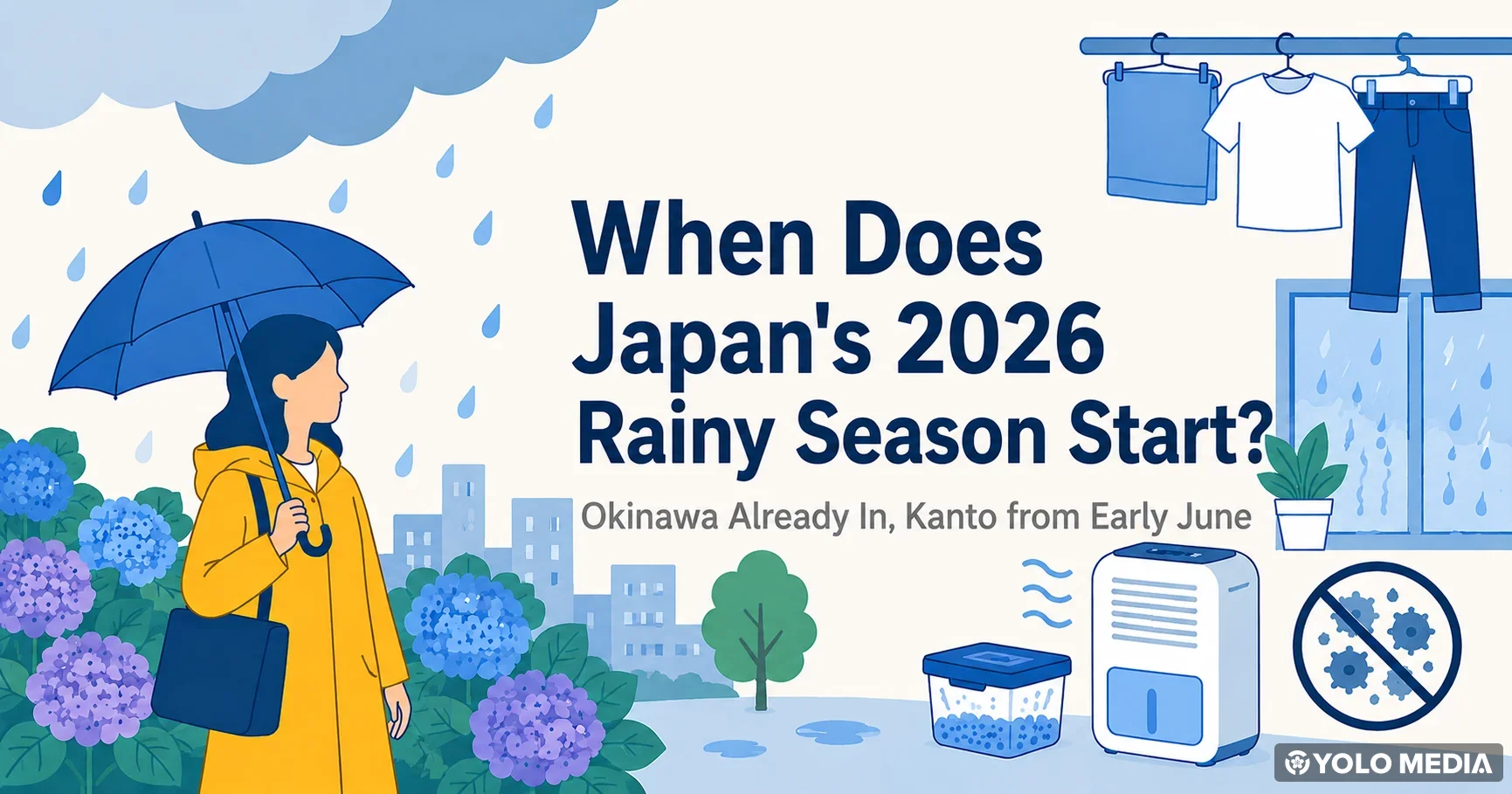
On May 4, 2026, the Japan Meteorological Agency announced that Okinawa had entered the rainy season — six days earlier than the average start date of May 10. The Amami region is next, expected in mid-May. Southern Kyushu and Shikoku are forecast to follow in late May, with northern Kyushu, Chugoku, Kinki, Tokai, and Kanto-Koshin all expected to enter tsuyu in early June.
(Source: Japan Meteorological Agency 2026 Rainy Season Updates)
If you live in the Kanto or Kansai region, that means you have roughly two to three weeks before tsuyu arrives. This article walks through the latest forecasts and the practical preparations you’ll want to make for mold, laundry, and commuting.
TL;DR
- Okinawa: Entered the rainy season on May 4, 2026 (six days earlier than average)
- Southern Kyushu & Shikoku: Late May, earlier than average
- Kanto, Kinki, Tokai: Early June
- End of rainy season: Mid- to late July nationwide. Duration expected to be average or slightly shorter
- Rainfall: Average to above-average from southern Kyushu through northern Tohoku. Watch for intense downpours
- Three pillars: Mold = ventilation + dehumidification + cleaning. Laundry = indoor-drying detergent + airflow. Commuting = foldable umbrella + waterproofing + transit app
Disclaimer: This article is based on forecasts and preliminary announcements from the Japan Meteorological Agency, the Japan Meteorological Association, and Weathernews between April and May 2026. Rainy season start and end dates are preliminary and may be revised later. Always check the official sources for the latest updates.
What Is Tsuyu, Exactly?
Tsuyu (梅雨, literally “plum rain”) is a weather pattern that brings prolonged rain to the Japanese archipelago from roughly June through July. It happens when warm, humid air from the Pacific meets cooler air from the continent, forming a stationary front (the tsuyu front) that lingers over Japan for weeks.
(Source: Japan Meteorological Agency)
Hokkaido doesn’t experience a distinct rainy season. Okinawa’s tsuyu starts about a month earlier than the mainland, usually around mid-May.
2026 Rainy Season Forecast by Region
Combining the latest forecasts from the Japan Meteorological Association and Weathernews (May 2026) with already-announced preliminary data:
| Region | Start | Average Start | Expected End |
|---|---|---|---|
| Okinawa | May 4 (confirmed preliminary) | Around May 10 | Late June – early July |
| Amami | Expected mid-May | Around May 12 | Late June |
| Southern Kyushu | Expected late May (earlier than average) | Around May 30 | Mid-July |
| Shikoku | Expected late May (earlier than average) | Around June 5 | Mid-July |
| Northern Kyushu & Chugoku | Expected early June (average to slightly early) | Around June 4–6 | Mid- to late July |
| Kinki & Tokai | Expected early June | Around June 6–7 | Mid- to late July |
| Kanto-Koshin | Expected early June | Around June 7 | Mid- to late July |
| Hokuriku & southern Tohoku | Expected mid-June | Around June 11–12 | Late July |
| Northern Tohoku | Expected mid-June | Around June 15 | Late July |
(Sources: Japan Meteorological Association 2026 Rainy Season Forecast, Weathernews 2026 Rainy Season Outlook)
This Year’s Pattern: Shorter, but Rainier
According to Weathernews’s 2026 outlook, the rainy season is forecast to be average length or slightly shorter, while rainfall from southern Kyushu through northern Tohoku is expected to be average or above average. In June, fronts are likely to stall along the southern coast of Honshu, with warm and humid air feeding heavy rain events.
(Source: Weathernews 2026 Rainy Season Outlook)
“Shorter” doesn’t mean “easier.” Higher daily rainfall raises the risk of linear precipitation bands and concentrated downpours, so flood preparedness matters more than usual this year. It’s worth checking your local hazard map before the rains arrive.
Mold Prevention — 3 Essentials for Your Apartment
Humidity can reach 70–80% during tsuyu. Without action, mold will appear in your closet, bathroom, window tracks, and on your shoes. In rental apartments, mold damage at move-out can result in deductions from your security deposit, so early prevention matters.
1. Ventilate
- Even on rainy days, opening windows for 10–15 minutes helps more than keeping everything shut
- Run the bathroom ventilation fan for at least 2 hours after bathing. 24-hour ventilation is ideal
- Keep closet doors open during the day
2. Dehumidify
- Moisture absorbers (available at 100-yen shops) go in your closet, shoe cabinet, and under the sink
- A dehumidifier is the best tool. If you don’t have one, your air conditioner’s “Dry” (dorai) mode works as a substitute
- Replace moisture absorbers as soon as they fill with water
3. Clean Regularly
- Spray bathroom walls and floor with mold remover (kabi-tori) once a week
- Window tracks (sashi) collect condensation easily — wipe them with a cloth
- Stuff wet shoes with newspaper to absorb moisture when you get home
You can get all the mold prevention supplies you need at 100-yen shops like Daiso and Seria: moisture absorbers, mold remover spray, and shoe drying packets.
Laundry — Indoor Drying Tips and Coin Laundry Hacks
The biggest tsuyu frustration is laundry that won’t dry. When you can’t hang clothes outside for days, that musty smell starts creeping in.
Indoor Drying Tips
- Leave space between items: Keep at least 10 cm between clothes on the rack. Bunching them together slows drying significantly
- Point a fan or circulator at them: Adding airflow dramatically cuts drying time
- Air conditioner Dry mode + fan is the most effective combination
- Turn thick clothes inside out so pockets and seams get airflow
- Use indoor-drying detergent: Products labeled 部屋干し (heya-boshi) contain antibacterial agents that prevent odor
Coin Laundry Dryers
When indoor drying just isn’t cutting it, the coin laundry (coin randorii) dryer is your backup:
- Drying only costs about ¥200–400 for 30 minutes
- Great for large items like futons and bed sheets
- Shops with gas dryers (look for Kanta-kun brand) dry especially fast
Commuting — Getting Through Rainy Days Comfortably
Shoes and Feet
- Waterproof spray your shoes in advance. Works on both leather shoes and sneakers
- For heavy rain days, consider rain boots or waterproof shoes. Workman sells affordable, high-performance waterproof options
- Keep a spare pair of socks in your bag for peace of mind
Choosing an Umbrella
- Always carry a foldable umbrella in your bag. A seiukenyo (combined sun/rain) type doubles as a parasol in summer
- Vinyl umbrellas are convenient in a pinch but can’t handle strong wind well
- Buying an umbrella at a konbini in an emergency costs ¥500–700. A foldable umbrella you already own saves money
Preparing for Train Delays
Heavy rain during tsuyu can cause train delays:
- Install a transit info app: Yahoo! Transit, NAVITIME, or Ekispert are popular choices
- On days when delays are expected, leave home 10–15 minutes earlier
- You can get a delay certificate (chien shomeisho) by tapping your IC card (Suica/PASMO) or asking at the station
Related: Our guide to seasonal traditions in Japan covers ajisai (hydrangea) spots that are especially beautiful during the rainy season.
Once the rainy season ends, intense summer heat awaits. Check our article on rising electricity and gas costs to get a sense of what your AC bills might look like.
FAQ
Q. Should I run the air conditioner during the rainy season?
A. Yes. The “Dry” (dehumidify) mode is effective at bringing down indoor humidity. Even in early June when temperatures aren’t extreme yet, using the AC for dehumidification is common practice.
Q. Does it rain non-stop during tsuyu?
A. No. There are sunny and partly cloudy days during the rainy season too. However, sudden heavy rain can happen unexpectedly, so carrying a foldable umbrella every day is recommended.
Q. Can mold affect my security deposit when I move out?
A. Yes. If mold removal is needed at move-out, cleaning costs may be deducted from your deposit (shikikin). Bathrooms, window areas, and closets are the most common trouble spots. Regular ventilation and cleaning can prevent this.
Q. Can I still enjoy outdoor activities during tsuyu?
A. Absolutely. Tsuyu is peak season for ajisai (hydrangea), and spots like Meigetsuin Temple in Kamakura and Hakusan Shrine in Tokyo are popular rainy-day destinations. Shrines and temples have a special atmosphere in the rain.
Key Takeaways
- ✅ Okinawa entered the rainy season on May 4, 2026. Southern Kyushu and Shikoku follow in late May; Kanto and Kinki in early June
- ✅ This year’s tsuyu may be average length or shorter, but rainfall is forecast to be average to above average — watch for heavy downpours
- ✅ Mold prevention comes down to three things: ventilate, dehumidify, and clean. 100-yen shops have everything you need
- ✅ Indoor-drying detergent plus a fan is the winning combo for laundry. Coin laundry dryers are a reliable backup
- ✅ Keep a foldable umbrella and waterproof spray handy to minimize commuting discomfort