Disclaimer: In Japan, drinking alcohol is prohibited by law for anyone under 20. Please drink responsibly and never drink and drive.
Introduction: Junmai, Ginjo… How Do You Choose?
Open the menu at an izakaya (Japanese pub) and you’ll see a row of similar-looking kanji: junmai ginjo, honjozo, namazake. The server asks, “Hiya or kan?” You answer “hiya,” expecting something cold, and get a glass that isn’t chilled at all. Has that ever happened to you?
Sake gets a lot more fun once you know the rules. The differences between types come down to just two factors, and serving temperatures have their own set names.
This guide covers:
- The basics of sake, and the “traditional sake brewing” added to UNESCO’s Intangible Cultural Heritage list in 2024
- The 8 official types, including junmai, ginjo, and daiginjo (with a quick-reference table)
- Temperature names, and “hiya,” the word that trips people up when ordering
- How to read a label and how to order at a bar
- Beginner-friendly brands, plus how to pick your first bottle based on drinks you already like
- Brewery visits, and the rules for taking sake home
Whether you’re brand new to sake or want to go deeper, feel free to jump to whatever interests you.
1. What Is Sake? A Brewed Drink Made from Rice, Water, and Koji
Sake (nihonshu) is made mainly from rice, rice koji, and water, then fermented. Like wine and beer, it’s a brewed drink. It is not distilled like shochu or whisky.
| Drink | How it’s made | Typical alcohol content |
|---|---|---|
| Sake | Brewed (fermented rice) | Around 15% (mostly 14 to 17%) |
| Wine | Brewed (fermented grapes) | 12 to 15% |
| Beer | Brewed (fermented barley) | Around 5% |
| Shochu | Distilled | Often around 25% |
Koji is steamed rice grown with koji mold. The koji turns the rice starch into sugar while yeast turns that sugar into alcohol, both at the same time. This simultaneous fermentation is one of sake’s defining features, and it’s part of why sake ends up stronger than other brewed drinks.
“Sake” and “Nihonshu” Aren’t Quite the Same
In Japanese, the word sake (酒) often means alcohol in general, including beer, wine, and shochu. To refer specifically to the rice-based drink, people say nihonshu (日本酒), and labels and laws use seishu (清酒). Abroad, “sake” means this Japanese rice-based drink, but if you ask for “osake” at a Japanese restaurant, the staff may ask which drink you mean. To be sure, ask for “nihonshu.”
2024: Traditional Sake Brewing Joins UNESCO’s Heritage List
In December 2024, Japan’s “traditional sake brewing” was added to UNESCO’s list of Intangible Cultural Heritage. It recognizes the koji-based techniques passed down by toji (master brewers) and kurabito (brewery workers), which are said to have taken their basic form more than 500 years ago. It covers not only sake but also the brewing of shochu, awamori, and mirin.
(Reference: Agency for Cultural Affairs "Inscription of Traditional Sake Brewing on UNESCO’s Representative List" (Japanese) / National Tax Agency "Traditional Sake Brewing" (Japanese))
2. Types of Sake: The 8 Official Types Come Down to Two Factors
Ever wondered what separates junmai ginjo from junmai daiginjo? Names like “junmai” and “ginjo” on a label are regulated by national labeling standards. Sake that meets these standards is called tokutei meishoshu (specially designated sake), and there are 8 types.
All 8 can be sorted by two factors:
- Whether brewer’s alcohol is added: if not, the name includes “junmai” (pure rice)
- The polishing ratio (seimaibuai): how much of the rice remains after milling. The smaller the number, the more the rice has been polished away
What Is the Polishing Ratio?
The polishing ratio shows how far the brown rice has been milled. “60% polishing ratio” means the outer 40% was polished away and the remaining 60% was used. The outer layers hold more protein and fat, which can create off-flavors. The more you polish, the cleaner the taste and the more elegant the aroma tends to be.
Quick reference: The 8 types of specially designated sake
| Name | Brewer’s alcohol | Polishing ratio | Flavor tendency |
|---|---|---|---|
| Junmai Daiginjo | No | 50% or less | Elegant and smooth, with a rich aroma |
| Daiginjo | Yes | 50% or less | Elegant, clean, and light |
| Junmai Ginjo | No | 60% or less | Fruity, with rice umami |
| Ginjo | Yes | 60% or less | Fruity and crisp |
| Tokubetsu Junmai | No | 60% or less, or a special method | More character than regular junmai |
| Junmai | No | No requirement | Full rice umami and body |
| Tokubetsu Honjozo | Yes | 60% or less, or a special method | Cleaner than regular honjozo |
| Honjozo | Yes | 70% or less | Light and easy to drink; great warm |
(Reference: National Tax Agency "Overview of Labeling Standards for Sake" (Japanese))
Ginjo and daiginjo must also be made with ginjo-zukuri, a method in which the ingredients and brewing process are carefully selected, in addition to meeting the polishing ratio.
Is Added Brewer’s Alcohol a Bad Thing?
Brewer’s alcohol is distilled alcohol made from sources like sugarcane. Adding a small amount can lift the aroma and lighten the finish. Junmai isn’t automatically “better”; it’s simply a matter of taste. Some of the daiginjo entered in sake competitions contain added brewer’s alcohol.
Sake that doesn’t qualify as one of the 8 types is called futsushu (regular sake). It’s affordable, and much of the “house sake” at izakaya and the sake in paper cartons is futsushu. For everyday drinking, it’s perfectly tasty.
Special Styles Based on How the Sake Is Made
Separate from the 8 types, some names describe how a sake was made or finished. They often appear on labels, so knowing them makes shopping more fun.
| Name | What it is | What to watch for |
|---|---|---|
| Namazake | Never pasteurized | Must be refrigerated. Drink soon after opening |
| Genshu | No water added to adjust strength | Higher alcohol, around 18 to 20% |
| Nigori | Coarsely filtered, so it looks cloudy white | Sweet and creamy. Gently swirl the bottle before pouring |
| Hiyaoroshi | Brewed in winter, aged over summer, released in autumn | Autumn only. Mellow and rounded |
| Koshu (aged sake) | Aged for several years | Amber color, nutty or caramel-like aroma |
| Sparkling sake | Sake with bubbles | Great for toasts. Serve chilled |
You can spot namazake in Japanese supermarkets and liquor stores because it sits in the refrigerated case. Take it straight home and into the fridge.
3. Sake Temperature Guide: Temperature Names and How to Order “Hiya”
Sake can be enjoyed both chilled and warmed. Each temperature range has its own lovely name.
Quick reference: Temperature names

The list runs from coldest at the top to hottest at the bottom.
| Name | How to tell |
|---|---|
| Yukibie (snow-chilled) | So cold that droplets form on the bottle. Aroma is subdued |
| Hanabie (flower-chilled) | You feel the cold when you touch the bottle |
| Suzubie (cool) | About as cold as a bottle left out of the fridge for a while |
| Shitsuon (room temperature) | When you hold the tokkuri (flask), it feels slightly cool |
| Hinatakan (sun-warmed) | When you drink it, it feels neither hot nor cold |
| Hitohadakan (body-warm) | When you drink it, it feels lukewarm |
| Nurukan (warm) | When you drink it, it feels warm. About body temperature |
| Jokan (fairly hot) | The tokkuri feels a little hot, and steam rises when you pour |
| Atsukan (hot) | Steam rises from the tokkuri, and it feels hot to hold |
| Tobikirikan (extra hot) | It feels quite hot right after you pick it up. Tastes drier |
(Reference: Japan Sake and Shochu Makers Association "How to Enjoy Sake" (Japanese))
“Hiya” vs. “Reishu”: How to Order Without Mix-Ups
This is an easy place to slip up when ordering. If you order “hiya,” you may get unheated, room-temperature sake rather than sake chilled in the fridge. Sake chilled in the fridge is called reishu.
- Want it cold → “Reishu de onegaishimasu”
- Want it warm → “Kan de onegaishimasu” or “Atsukan de onegaishimasu”
- Want it at room temperature → “Joon de onegaishimasu”
Some places serve “hiya” chilled, so if you’re unsure, just ask “Tsumetai desu ka?” (Is it cold?).
Recommended temperatures by type
| Type | Recommended temperature | Note |
|---|---|---|
| Fruity type | 10 to 16°C | Can also be enjoyed as nurukan |
| Light, smooth type | 6 to 10°C, or close to freezing | Narrow range of good drinking temperatures |
| Rich, full-bodied type | 10 to 45°C | Widest temperature range; enjoy how the taste changes with temperature |
| Aged type (koshu, aged sake) | 7 to 25°C | Wide temperature range |
(Reference: Japan Sake and Shochu Makers Association "How to Enjoy Sake" (Japanese))
These are only guidelines. The same sake can taste like a completely different drink chilled versus lukewarm, so give it a try.
4. Reading a Sake Label: Four Numbers That Hint at the Taste
The back label of a sake bottle often lists numbers that help you imagine the flavor.
| Label item | Meaning | How to read it |
|---|---|---|
| Seimaibuai (polishing ratio) | How much of the rice remains | 50% or less suggests daiginjo class; 60% or less, ginjo class |
| Nihonshu-do (sake meter value) | Sweet vs. dry indicator | The bigger the plus, the drier; the bigger the minus, the sweeter |
| Sando (acidity) | Amount of acid | Higher means richer and fuller; lower means lighter and cleaner |
| Alcohol content | Strength | Around 15% is typical; genshu is higher |
As a rough guide, a sake meter value around +5 reads as “slightly dry,” and around -3 as “slightly sweet.” But high acidity can make even a sweet sake taste dry, so the numbers won’t always match. Use them to get a general direction.
Common words on labels
- Kuramoto: the name of the brewery
- Toji: the master brewer
- Seizo nengetsu: the year and month the sake was bottled (not an expiration date)
- Yo-reizo: “keep refrigerated,” often on namazake
5. Enjoying Sake at a Bar: How to Order and Try Flights
Ordering at an izakaya
At an izakaya, sake is usually ordered by the go (gō). One go is about 180ml. It comes in a small flask called a tokkuri, and you pour it into a small cup called an ochoko.
| What you want to say | Japanese phrase |
|---|---|
| Ask for a recommendation | “Osusume no nihonshu wa arimasu ka?” |
| Want something dry | “Karakuchi no nihonshu o onegaishimasu” |
| Want it cold | “Reishu de onegaishimasu” |
| Want it hot | “Atsukan de onegaishimasu” |
| Want to try a few | “Nomikurabe setto wa arimasu ka?” (Do you have a tasting flight?) |
Some places put your glass in a wooden box (masu) and pour until it overflows. This is called mokkiri, a little gesture of hospitality. For how to read izakaya menus and the flow of ordering, see our first izakaya experience guide (otoshi, kanpai, and ordering).
 Food & Dining
Your First Izakaya Experience Otoshi, Kanpai & Ordering: What You Need to Know
The complete guide to read before your first izakaya visit. Covers the confusing otoshi charge, when to join the kanpai …
Read related article
Find your favorite with a tasting flight
To start, we recommend a nomikurabe (tasting flight) set, where you can try small pours of several kinds. You’ll be surprised how different two junmai ginjo can taste depending on the region and brewery.
In Tokyo, the Japan Sake and Shochu Information Center in Nishi-Shinbashi, run by the Japan Sake and Shochu Makers Association, lets you taste sake from all over Japan starting at ¥100 per glass. It’s open on weekdays only and closed on weekends and holidays.
(Reference: Japan Sake and Shochu Makers Association "Japan Sake and Shochu Information Center" (Japanese))
Sake etiquette
- For how to pour for others and receive a pour (oshaku), see our first izakaya experience guide (otoshi, kanpai, and ordering)
- Pouring for yourself (tejaku) is fine at casual gatherings
- If you don’t drink alcohol, whether for religious or health reasons or because you’re pregnant, it’s not rude to decline or to toast with a soft drink
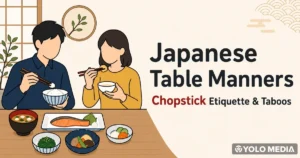
For general dining etiquette, see our guide to Japanese table manners and chopsticks.
 Food & Dining
Japanese Table Manners & Chopstick Etiquette: Rules and Taboos You Might Not Know
Japanese table manners have specific rules that may surprise international residents. This guide covers everything: prop…
Read related article
Sake is around 15% alcohol, much stronger than beer (around 5%). Because it goes down so smoothly, you may get drunk before you notice. Drinking about the same amount of water alongside it (called yawaragi-mizu, “chaser water”) helps you avoid feeling rough later.
6. Best Sake for Beginners and How to Pick Your First Bottle
Quick reference: Pick your first bottle based on what you already drink
Starting from drinks you already like makes it easier to find a sake that suits you.
| What you usually drink | Recommended type | How to drink it |
|---|---|---|
| White wine, fruity drinks | Junmai ginjo, junmai daiginjo | Hanabie |
| Sparkling wine, champagne | Sparkling sake | Yukibie |
| Beer, crisp drinks | Clean, dry sake from Niigata; honjozo | Reishu or room temperature |
| Red wine, full-bodied drinks | Junmai, tokubetsu junmai | Room temperature to nurukan |
| Whisky, brandy | Koshu (aged sake), genshu | Room temperature, in small sips |
| Sweet drinks, cocktails | Nigori | Well chilled |
Classic brands for beginners
These are easy to find at supermarkets, liquor stores, and airports across Japan.
| Brand | Region | Type and character |
|---|---|---|
| Dassai Junmai Daiginjo 45 | Yamaguchi | Aromatic and fruity; a classic first sake |
| Dassai Migaki Niwari Sanbu | Yamaguchi | 23% polishing ratio; also chosen as a gift |
| Hakkaisan | Niigata | Clean and dry; pairs easily with food |
| Kubota Senju | Niigata | Crisp and dry; goes with most Japanese dishes |
| Kokuryu | Fukui | Smooth and refined; wide range of styles |
Within the same brand, taste and price change with the grade, such as junmai ginjo or daiginjo. Liquor sections in department store food halls sometimes offer tastings, and staff can help you choose if you describe what you like. We’ve covered how to enjoy those food halls in our depachika guide.
 Food & Dining
How to Enjoy Depachika: Best Stores in Tokyo & Osaka, Tasting Etiquette & Gift Tips
Not sure where to go or what to buy at depachika? From Isetan and Hankyu Umeda to tasting etiquette, bento, wagashi, and…
Read related article
Convenience stores also sell one-go cup sake and small 300ml bottles. If buying a full 720ml bottle feels like a big commitment, try smaller sizes first to find the style you like. We introduce convenience store drinks in our konbini food guide too.
7. Sake Regions and Brewery Visits: Go Where Sake Comes From
How Region Shapes Sake’s Character
Sake changes with the water, rice, and climate where it’s made. Knowing the main regions gives you a clue when choosing at a liquor store.
| Region | Characteristics | Representative brands or areas |
|---|---|---|
| Niigata | Tanrei karakuchi (clean, crisp, dry) | Hakkaisan, Kubota |
| Nada, Hyogo | Made with Miyamizu, a fairly hard water rich in minerals; robust, powerful flavor | Nadagogo (Kobe and Nishinomiya) |
| Fushimi, Kyoto | Made with soft water; smooth, gentle flavor | Fushimi’s sake brewery district |
| Yamaguchi | Popular, easy-drinking, aromatic junmai daiginjo | Dassai |
| Tohoku (Akita, Yamagata, etc.) | Rich rice umami and roundness | Many famous breweries in each prefecture |
Nada and Fushimi are two of Japan’s best-known sake regions. Their different waters create different tastes, a contrast traditionally described in Japanese with the old saying Nada no otoko-zake, Fushimi no onna-zake (“Nada’s masculine sake, Fushimi’s feminine sake”).
(Reference: Japan Tourism Agency Multilingual Commentary Database "Sake: How Sake Is Made" (Japanese) / Nishinomiya City "About the Miyamizu Preservation Ordinance" (Japanese))
Brewery Visits: See Where Sake Is Made
Once you’re into sake, try visiting a brewery. Beyond seeing the tools and atmosphere, you can sometimes taste sake that’s only sold on-site.
Sake regions that are easy to visit
- Fushimi, Kyoto: Reachable by train from Kyoto Station, with a streetscape of breweries, museums, and tasting spots
- Nadagogo, Hyogo: The Kobe and Nishinomiya area, home to many major breweries with museums that are easy to visit
- Niigata: Lots of breweries, each area with its own character. There are even tasting facilities inside the station
Tohoku also has many wonderful breweries. If you want to combine a brewery visit with a trip, check out our off-the-beaten-path guide to Tohoku.
What to check before you go
- Reservations: Some breweries require one, and some don’t accept visitors at all
- Fees: Some tours are free, others are paid
- English support: Some breweries offer English-guided tours
- Season: Brewing mainly runs from autumn to spring (roughly October to March). Some breweries pause tours during brewing season, so check their official website
Breweries sometimes ask visitors not to eat natto (fermented soybeans) the day before or the day of a visit, to protect the koji mold. Natto bacteria are very strong and are said to affect sake brewing. Check the visitor guidelines in advance.
8. Souvenir and Take-Home Rules
Sake is a popular souvenir to bring home. But there are rules when flying. For tips on choosing gifts in Japan, see our guide to Japanese gift-giving and omiyage etiquette.
 Culture & Society
Be Respected at Work! The Ultimate Guide to Japanese Gift-Giving & Omiyage Etiquette (2026)
From choosing the perfect omiyage to mastering Ochugen and Oseibo seasonal gifts. Discover the rules, taboos, and secret…
Read related article
Carry-on vs. checked baggage
| How you carry it | Rule |
|---|---|
| Carry-on | On international flights, liquids over 100ml aren’t allowed. You’ll have to give up the bottle at security |
| Checked baggage (suitcase) | Alcohol at 24% or less isn’t classed as dangerous goods for air travel, so you can check it, as long as it stays in its original retail bottle or can (not poured into a flask). Airline weight and piece limits still apply |
| Bought at an airport duty-free shop after departure | Can be carried on if sealed in a special bag (STEBs). If you connect abroad, don’t open it until you’ve cleared security at the connecting airport |
(Reference: Ministry of Land, Infrastructure, Transport and Tourism "Changes in Handling of Liquids Purchased at Airport Duty-Free Shops" (Japanese) / Ministry of Land, Infrastructure, Transport and Tourism "Examples of Dangerous Goods by Air Transportation")
If you buy sake before security and put it in your carry-on, you’ll have to give it up at the checkpoint. Pack souvenir bottles in your suitcase. Wrapping them in clothes or using padded bottle bags helps keep them from breaking.
Apart from Japan’s rules for taking sake out, the country you’re entering has its own rules. Some countries limit how much alcohol you can bring in duty-free, and some prohibit it. Check your destination’s customs information before you leave.
9. You Must Be 20 to Drink in Japan
In Japan, it’s illegal for anyone under 20 to drink alcohol, and stores and bars can’t sell or serve alcohol to anyone under 20. Even if you come from a country where adulthood starts at 18, you can’t drink in Japan until you turn 20. Stores and bars may ask for proof of age, so carry something that shows your age, like your Residence Card (zairyu card).
(Reference: National Tax Agency "Preventing Drinking by Those Under 20" (Japanese))
FAQ
Q: Which is stronger, sake or wine?
A: Sake is around 15% and wine is about 12 to 15%, so sake is usually a little stronger. The cups are small, which makes it easy to drink more than you realize. Enjoy it slowly, with water.
Q: Should you sip or shoot sake?
A: Sake is usually sipped slowly from a small cup (ochoko). Downing it in one go, or dropping a shot glass of sake into beer as a “sake bomb,” isn’t how sake is drunk in Japan.
Q: Which tastes better, daiginjo or junmai daiginjo?
A: The difference is whether brewer’s alcohol is added. Junmai daiginjo has none added. Which tastes better depends on your taste. If you like rice umami and body, try junmai daiginjo; if you prefer a clean, light taste, try daiginjo.
Q: How long does opened sake last?
A: Keep it in the fridge and finish it soon. Namazake and aromatic ginjo change flavor quickly, so drink those especially soon.
Q: Does unopened sake have an expiration date?
A: Sake isn’t legally required to show a best-before date. The label shows the seizo nengetsu (bottling year and month). For the best flavor, drink it soon after buying. Keep namazake in the fridge, and store pasteurized sake somewhere cool and out of the sun.
Q: Are “hiya” and “reishu” the same?
A: Not necessarily. If you order hiya, you may get room-temperature sake. Reishu is sake chilled in the fridge. If you want it cold, ordering “reishu” is the safe bet.
Q: How should I choose sake to go with food?
A: Clean ginjo or crisp, dry sake goes well with sashimi and salty dishes. Warm junmai pairs nicely with richer dishes like simmered foods or yakitori with sauce. When in doubt, ask the staff, “Kono ryori ni au nihonshu wa?” (Which sake goes with this dish?)
Key Takeaways
- ✅ Two factors explain the types. No added brewer’s alcohol means “junmai”; a smaller polishing ratio means “ginjo” or “daiginjo”
- ✅ Order cold sake as “reishu.” If you order “hiya,” you may get room-temperature sake
- ✅ Pick your first bottle from drinks you already like. White wine fans: junmai ginjo. Red wine fans: warm junmai
- ✅ Find your taste with a tasting flight. In Tokyo, the Japan Sake and Shochu Information Center offers tastings from ¥100
- ✅ Pack souvenir bottles in your suitcase. Liquids over 100ml can’t go in your carry-on
- ✅ In Japan, the drinking age is 20. Even if you can drink at 18 in your home country, the age in Japan is 20
The more you learn about sake, the more you look forward to the next bottle. Why not start by ordering one go of a type that catches your eye at your next izakaya visit?