Introduction
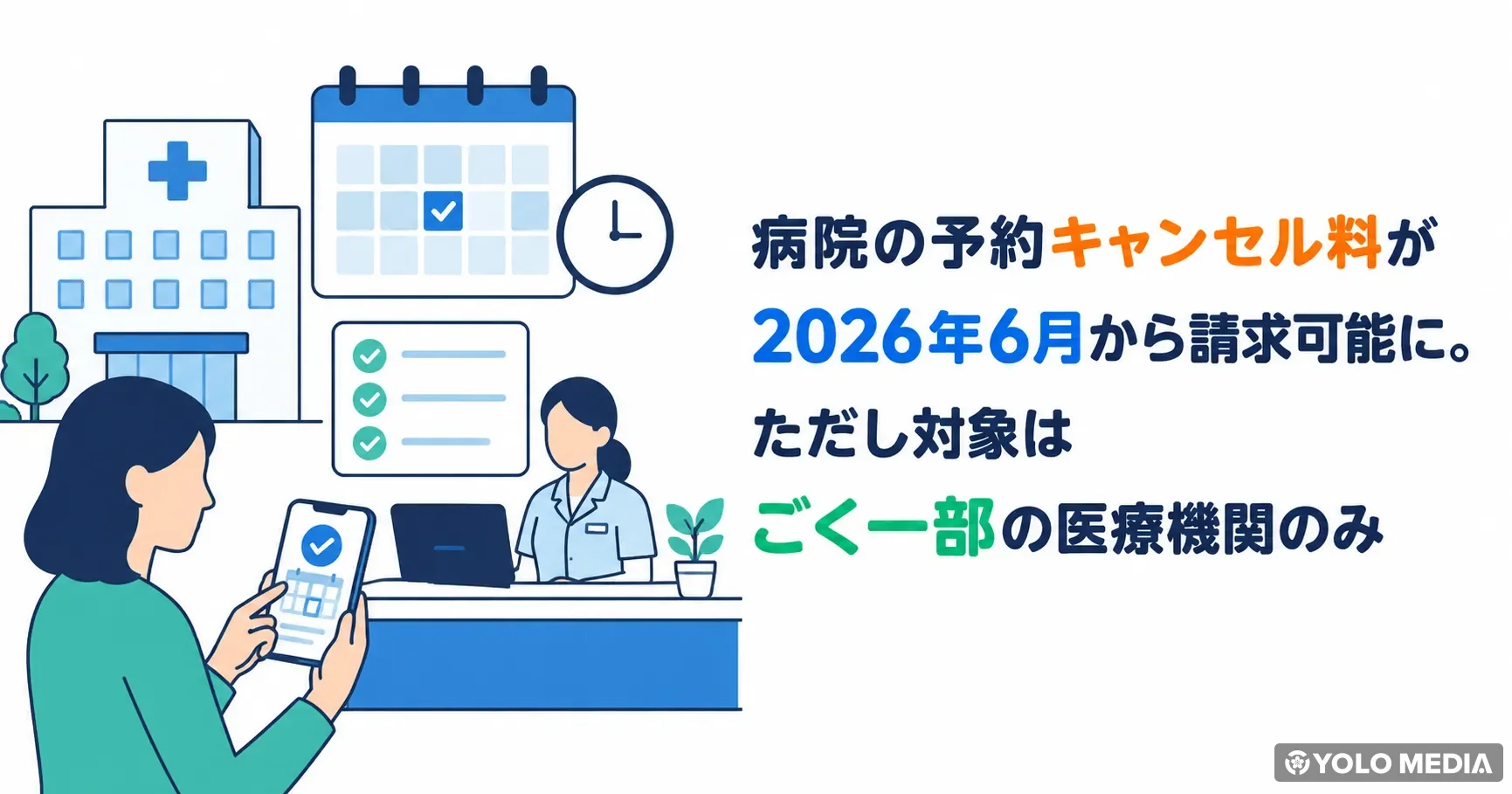
“Will I be charged if I cancel a hospital appointment?” You may have seen recent headlines and felt worried. Starting June 1, 2026, medical facilities in Japan are now allowed to charge patients a cancellation fee for missed appointments.
However, this only applies to around 928 facilities nationwide that offer a paid reservation system. If you book free appointments at a regular hospital or clinic, this change does not affect you. Let’s break down exactly how this system works.


What You’ll Learn
- From June 1, 2026, some medical facilities in Japan can charge cancellation fees
- Only about 928 facilities that offer a paid reservation service called yoyaku shinsatsu (予約診察) are eligible. Regular free appointments are not affected
- Each facility sets its own cancellation fee amount and timing. Patient consent at the time of booking is required
- The Ministry of Health, Labour and Welfare initially caused confusion with a misleading notice and later issued a correction and apology
Disclaimer: This article is based on reports from Sanyo Shimbun (May 29, 2026) and Yomiuri Shimbun (May 31, 2026). Information is current as of June 1, 2026.
Most People Are Not Affected
Cancellation fees can only be charged by medical facilities that have registered with the government to offer yoyaku shinsatsu (予約診察), a paid reservation service. As of August 2024, only about 928 facilities nationwide participate, which is a tiny fraction of all medical institutions in Japan.
(Source: Sanyo Shimbun)
If you book free appointments at a regular hospital or clinic, you are not subject to cancellation fees.
Yoyaku shinsatsu is a system where patients pay an extra reservation fee (yoyaku-ryou, 予約料) and are guaranteed to see a doctor within 30 minutes of their scheduled time. This is completely separate from the standard free appointment booking that most people use.
(Source: Yomiuri Shimbun)
How Cancellation Fees Work
Each medical facility sets its own cancellation fee amount. There is no nationally standardized rate. The only requirement is that the fee must be a “socially reasonable amount.” The timing for when fees kick in also varies by facility. Some may charge starting one day before the appointment, while others may use a tiered system starting two days before.
The key point is that you must agree to the cancellation fee terms when you book the appointment. You will not be charged without your knowledge or consent.
When using yoyaku shinsatsu, confirm the cancellation fee amount and when it applies at the time of booking.
Why Cancellation Fees Are Now Allowed
When patients cancel at the last minute or fail to show up, other patients who could have been seen during that time slot lose the chance to be examined. The appointment slot and the preparations reserved for that patient also go to waste. Reducing this impact is the goal behind the change.
For this reason, cancellation fees are only allowed for yoyaku shinsatsu, the paid reservation service where patients pay an extra fee to secure their time. Standard free appointments are not affected because they do not reserve a slot through a paid reservation fee.
(Source: Diamond Visionary)
Why the Confusion? The Ministry’s Correction and Apology
The initial notice from the Ministry of Health, Labour and Welfare (Kousei Roudoushou, 厚生労働省) was worded in a way that suggested all hospitals could start charging cancellation fees. This caused widespread confusion. The Ministry later corrected the notice to clarify the limited scope, and Minister of Health Ueno apologized for “causing confusion in the field.”
What You Should Know as a Resident of Japan
If you go to a regular hospital or clinic, you are almost certainly not affected. If you are unsure whether your hospital charges a reservation fee, simply ask at the reception desk: “Is there a cancellation fee?” (kyanseru-ryou wa kakarimasu ka?, キャンセル料はかかりますか?).
Regardless of whether cancellation fees apply, it is good etiquette to cancel appointments as early as possible. Last-minute cancellations take away appointment slots that other patients could use.
If you want to learn more about the healthcare system and living costs in Japan, check out these articles:
- Old Insurance Card Deadline is July 2025: Schedule for switching to the My Number insurance card
- Cost of Living in Japan Guide: A breakdown of monthly expenses including medical costs
FAQ
Q. Will I be charged if I cancel a regular hospital appointment?
A. No. Cancellation fees only apply to the roughly 928 facilities that offer the paid yoyaku shinsatsu service. Standard free appointments are not affected.
Q. How much is the cancellation fee?
A. Each facility sets its own amount. There is no nationally fixed rate. You will be informed of the fee when you make your reservation.
Q. Can I be charged a cancellation fee without my consent?
A. No. Patient consent at the time of booking is a requirement for charging the fee.
Key Takeaways
- ✅ From June 1, 2026, cancellation fees are only allowed at around 928 facilities that offer the paid yoyaku shinsatsu reservation service
- ✅ Regular hospitals and clinics with free appointments are not affected. Most people will see no change
- ✅ Each facility sets its own fee amount and timing. You must be informed and give consent when booking
- ✅ If you are unsure, ask at the reception: “Is this yoyaku shinsatsu? Is there a cancellation fee?”
Headlines alone can make it sound like everyone will be charged a cancellation fee at the hospital, but in reality only a small number of facilities are affected. If the hospital you regularly visit does not charge a reservation fee, nothing changes for you. Only when you use a hospital that charges a reservation fee do you need to check the cancellation fee and its amount at the time of booking, and you will be fine.