What’s Happening
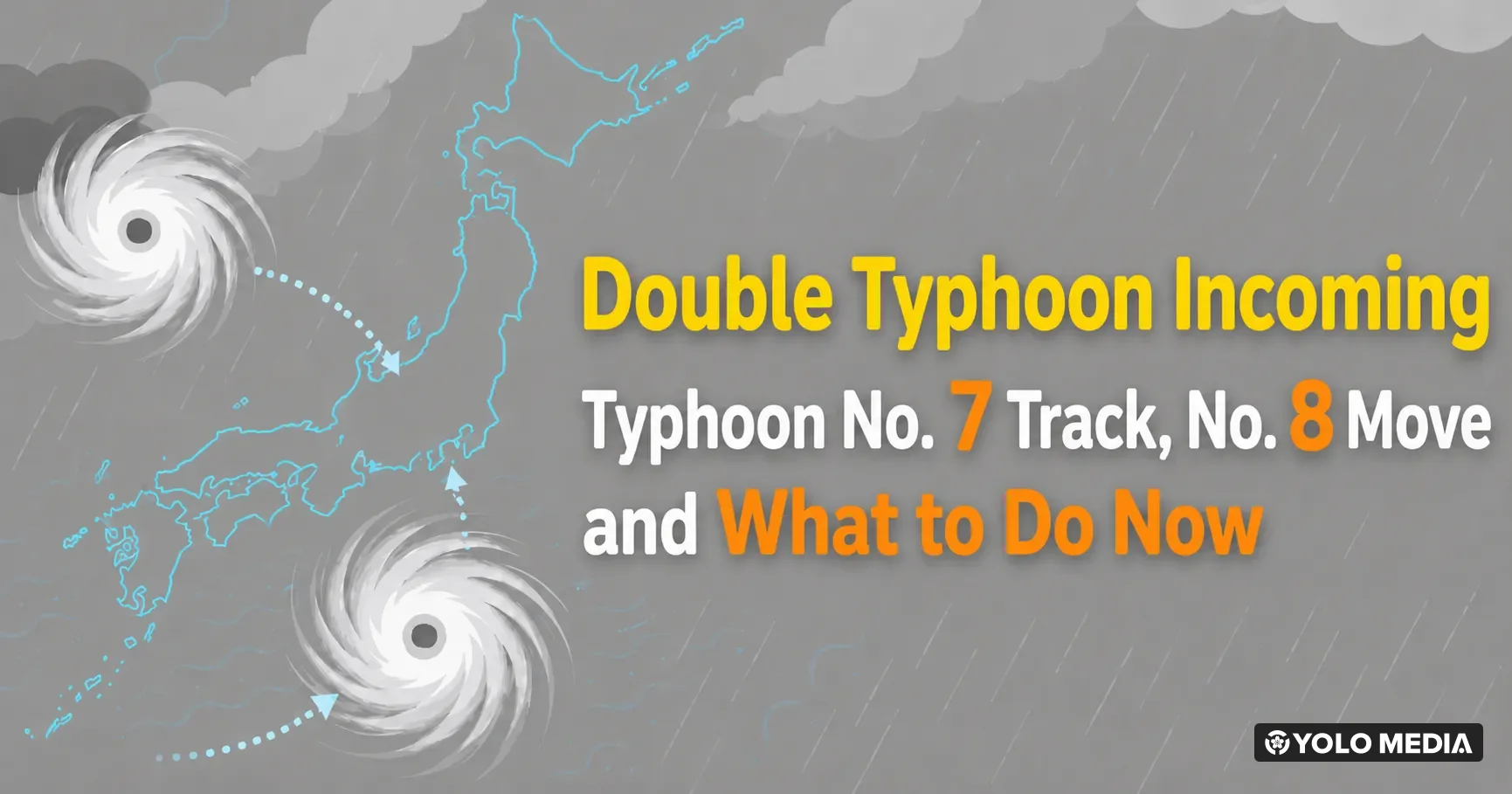
As of June 24, 2026, Typhoon No. 7 (Maekara) is classified as “very strong” and is slowly moving north-northwest from south of Okinawa. It will approach the Sakishima Islands (including Ishigaki and Miyako Islands, a group of islands at the western tip of Okinawa) on June 25, reach the main island of Okinawa on June 26, then affect Kyushu, Shikoku, and the Kanto region from June 27 onward.
At the same time, Typhoon No. 8 has also formed and may approach the Kanto region around June 27. Whether this is your first typhoon in Japan or you’ve been through them before, this one is different — two storms in the same week means the risk doesn’t end when the first one passes.


TL;DR
- Typhoon No. 7 is “very strong” — central pressure 965 hPa, max wind speed 40 m/s. It will pass near the Sakishima Islands on June 25 and reach Okinawa’s main island on June 26
- Kyushu, Kansai, and Kanto will be affected June 27–28, with heavy rain starting before the typhoon itself arrives
- Typhoon No. 8 is also active and may approach Kanto around June 27 — a double typhoon scenario
- If Japanese is difficult, use NHK WORLD (English/multilingual) or the Safety tips app for disaster alerts in your language
Disclaimer: This article is based on announcements from the Japan Meteorological Agency (JMA) as of June 24, 2026. Typhoon tracks can change rapidly. Always check the latest updates on the JMA website.
Typhoon No. 7 & No. 8: Latest Information (as of June 24)
As of 3 AM on June 24, Typhoon No. 7 is located south of Okinawa (21°05’N, 124°30’E), moving slowly north-northwest at about 10 km/h. With a central pressure of 965 hPa and maximum wind speeds of 40 m/s (gusts up to 55 m/s), it is classified as “very strong.”
Current Status
| Item | Details |
|---|---|
| Name | Typhoon No. 7 (Maekara) |
| Position (3 AM, June 24) | South of Okinawa (21°05’N, 124°30’E) |
| Direction | North-northwest at 10 km/h |
| Central pressure | 965 hPa |
| Max wind speed | 40 m/s (gusts up to 55 m/s) |
| Intensity | Very strong |
Projected Path
| Date | Expected Location |
|---|---|
| June 25 | Approaches the Sakishima Islands with a storm zone (areas with sustained winds over 25 m/s) |
| June 26 (9 AM) | Near Okinawa main island (central pressure ~980 hPa). Wind strong enough to overturn trucks |
| June 27 (9 AM) | Off the coast of Shikoku (~985 hPa). Heavy rain in Kyushu and Shikoku |
| June 28 onward | Reaches south of Kanto, then expected to become an extratropical cyclone |
(Source: JMA — "Typhoon Information")
Double Typhoon: Watch Typhoon No. 8 Too
Typhoon No. 8 has formed at the same time and may approach the Kanto region around June 27. Two typhoons affecting Japan in rapid succession means the risk doesn’t end after the first one passes.
Once Typhoon No. 7 moves through, Typhoon No. 8 may follow shortly after. Do not let your guard down once the first storm passes.
Japan’s Warning System: What the Levels Mean
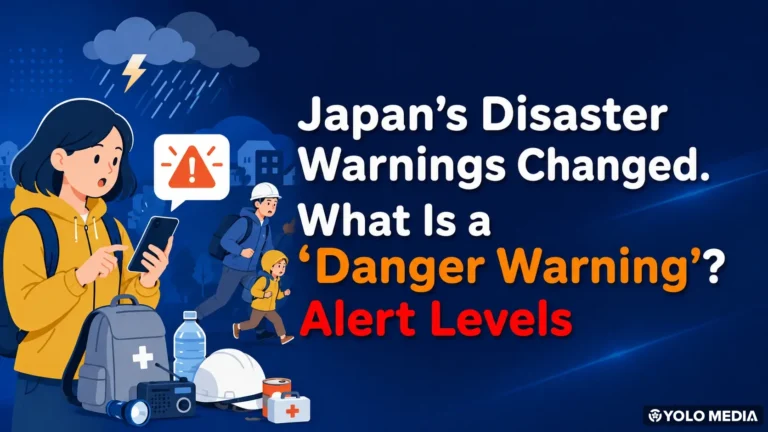
In Japan, disaster warnings now come with level numbers. The higher the number, the more serious — and Level 4 means everyone must evacuate. When a notification arrives on your TV or phone, use this table as a reference.
| Level | Warning Name | What to Do |
|---|---|---|
| Level 2 | Advisory | Confirm your evacuation site and route |
| Level 3 | Warning | Elderly, children, and those with disabilities should start evacuating |
| Level 4 | Danger Warning | Everyone in at-risk areas must evacuate |
| Level 5 | Emergency Warning | A disaster is already occurring — take immediate action to protect your life |
When a Level 4 “Danger Warning” is issued, everyone must evacuate. Do not wait for Level 5. Level 5 means a disaster is already happening.
Getting Disaster Information in Your Language
Typhoon warnings are issued in Japanese. If you or your family are not confident with Japanese, the tools below can help — install them before the storm arrives.
| Tool | What It Offers | How to Access |
|---|---|---|
| NHK WORLD | News and disaster alerts in English and multiple languages | nhk.or.jp/nhkworld |
| Safety tips | Push notifications for evacuation alerts in 14 languages | Search “Safety tips” on App Store / Google Play |
| JMA (English) | Weather warnings and advisories from Japan’s meteorological agency | jma.go.jp/jma/en |
| Yahoo! Disaster Alerts | Location-based push notifications | Search “Yahoo!防災速報” on App Store / Google Play |
The “Safety tips” app covers 14 languages and sends real-time evacuation alerts based on your location. Install it now if you haven’t already.
What to Do Right Now
If You’re in Okinawa or the Sakishima Islands (June 25–26 is critical)
- [ ] Stay indoors now. Wind speeds in the storm zone make umbrellas useless
- [ ] Tape windows or close curtains to prevent glass from scattering if it breaks
- [ ] Fill the bathtub with water in case water supply is cut
- [ ] Fully charge your phone and have a portable battery ready
- [ ] Know your evacuation site. Check your city’s website or the national Hazard Map Portal
If You’re in Kyushu, Shikoku, Kansai, or the Kanto Region (June 27–28)
- [ ] Clean rain gutters and drains. Blockages cause flooding even in moderate rain
- [ ] Bring loose items inside — flower pots, bicycles, drying racks
- [ ] Check transport updates for June 27–28 in advance. Planned service suspensions (when operators announce cancellations ahead of the storm) are likely
- [ ] Unplug electronics as a precaution against lightning
There is no need to walk to work or school during a typhoon. Contact your employer or school in advance and prioritize your safety. Many workplaces in Japan have policies allowing time off during typhoons.
FAQ
Q: Can I take time off work because of a typhoon?
A: Typhoons are legally considered force majeure — meaning a situation beyond anyone’s control. If commuting puts you at risk, contacting your employer and staying home is the right call. Many companies in Japan have typhoon absence policies.
Q: What happens to flights and trains?
A: Flights to and from Okinawa are already seeing cancellations. Services in Kyushu, Kansai, and Kanto may be suspended on June 27–28. Check your airline or railway operator’s website for real-time updates.
Q: Where can I find a hazard map for my area?
A: Check your city or town’s website, or use the Hazard Map Portal by the Ministry of Land, Infrastructure, Transport and Tourism. It’s worth finding out now whether your home or workplace is in a flood or landslide risk zone.
Q: How can I get evacuation alerts in my language?
A: Install the “Safety tips” app (14 languages) for push notifications. The NHK WORLD app also delivers disaster information in English and other languages.
Q: Is Typhoon No. 8 really coming too?
A: Yes. Both Typhoon No. 7 and No. 8 are currently active simultaneously — a double-typhoon scenario. Typhoon No. 8 may reach the Kanto area around June 27. Keep monitoring the latest forecasts.
Key Takeaways
- ✅ Typhoon No. 7 is “very strong” — Sakishima on June 25, Okinawa main island on June 26, Kyushu/Kansai/Kanto by June 27–28
- ✅ Typhoon No. 8 is also active — don’t let your guard down once No. 7 passes
- ✅ Level 4 “Danger Warning” means everyone evacuates. Don’t wait for Level 5
- ✅ NHK WORLD and Safety tips provide multilingual disaster alerts
- ✅ Prepare now: charge up, store water, confirm your evacuation site, secure loose items
Typhoon No. 7 is forecast to affect a wide stretch of Japan through the end of this week. Check the JMA Typhoon Information regularly for the latest track updates, and act early rather than waiting to see how things develop.
For more on how Japan’s disaster warning system works, see our guide on Japan’s New Disaster Warning System (2026). For heat and summer health tips, see May Heatwave Alert and What to Do.