Introduction
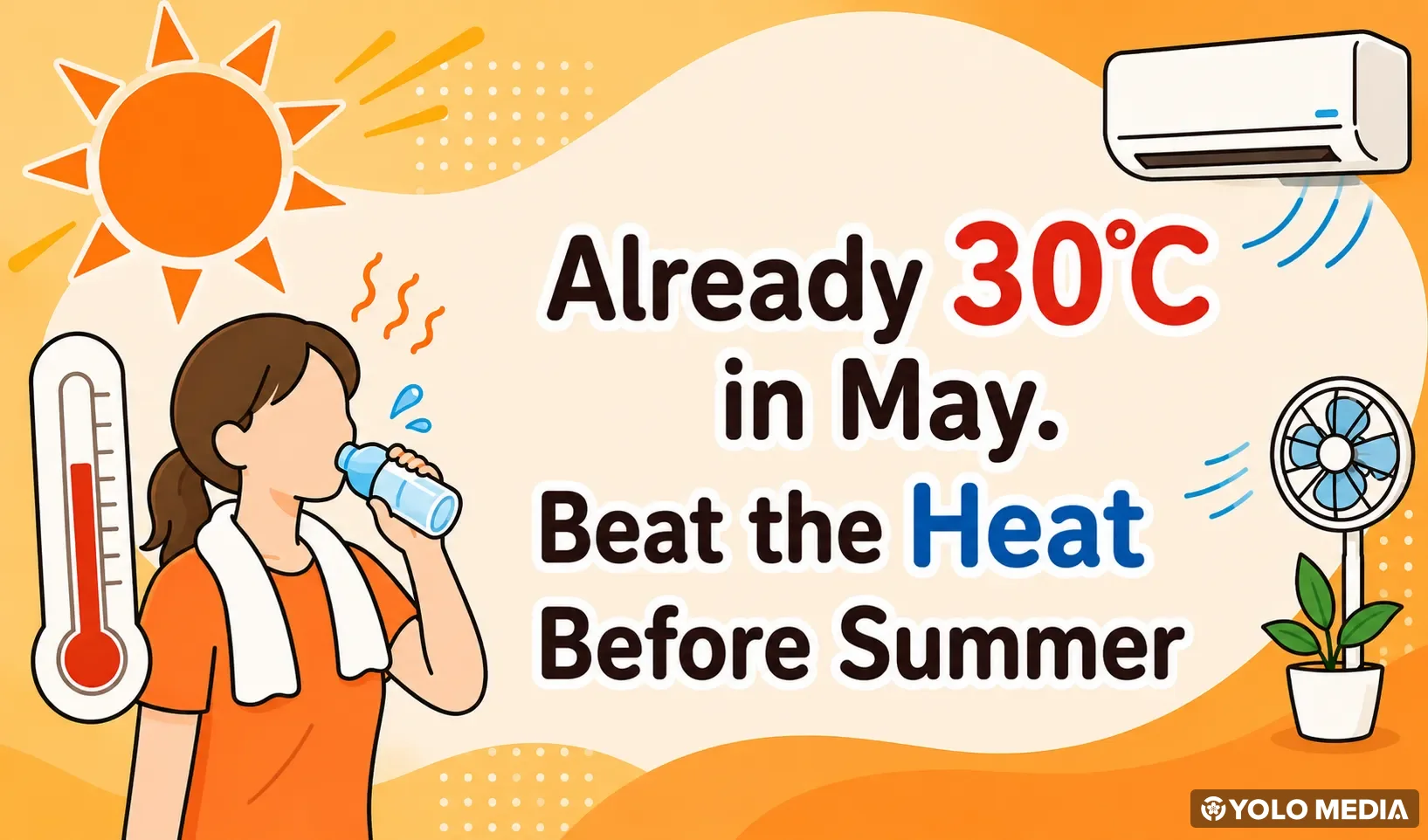
If you checked the weather this morning and saw a 31°C forecast, you read it right. With many homes still not running the AC, the body can hit its limit faster than you’d expect when midsummer temperatures arrive this early.
May 2026 has brought repeated manatsu-bi (summer days, meaning 30°C or higher) to central Tokyo. Tokyo recorded 30.2°C on May 17, with 200 weather stations nationwide hitting summer-day levels (tallied through 5:00 PM, excluding Minamitorishima). On May 29, Tokyo central reached 30.0°C again, with summer days spreading across eastern and western Japan. Heat that usually arrives in mid-June is showing up more than two weeks early.
In response to this pattern, the Ministry of the Environment and Japan Meteorological Agency started the 2026 Heatstroke Alert season on April 22. Alerts are issued when the WBGT (Wet Bulb Globe Temperature, a combined index of temperature, humidity, and solar radiation) is forecast to reach dangerous levels, and you can check them on TV or via mobile notifications.
The key fact to know is this: the same 30°C reading hits your body very differently in May than in midsummer. We’ll get to why in a moment. If this is your first Japanese summer, this is exactly the period to pay attention to. Here are the essentials.
Sources:
- Ministry of the Environment — Heatstroke Alert Status
- Japan Meteorological Association tenki.jp — Summer Days in May 2026 (May 17 report)
- Japan Meteorological Association tenki.jp — May 29 Heatwave Report

What You’ll Learn
- The 2026 Heatstroke Alert system is running, and is active right now
- Why May heat is more dangerous than the same temperature in August
- Three things to do starting today
Disclaimer: This article is based on the Ministry of the Environment and Japan Meteorological Agency’s official announcements as of May 2026. Information as of May 29, 2026.
2026 Summer Outlook: JMA Forecasts Above-Average Heat Nationwide
The Japan Meteorological Agency’s three-month outlook released on May 19 predicts above-average temperatures across virtually all regions and months from June to August. The only exception is August in Hokkaido, forecast as “average or above.” The outlook also expects 7 to 14 instances of kokusho-bi (extreme heat days of 40°C or higher) at observation points nationwide, with high humidity and temperatures likely to continue from the start of the rainy season.
The JMA estimates a 90% chance of El Niño (a phenomenon where Pacific sea surface temperatures rise above average, affecting global weather) developing this summer. However, atmospheric temperatures remain elevated due to climate change, so even an El Niño year is expected to bring above-average heat.
The trend is already showing in May. Kake in Hiroshima Prefecture recorded 34.8°C on May 17, breaking the all-time May high for that location. Yamaguchi and Kumamoto saw four consecutive summer days by mid-May, the first time this has happened since records began at those sites.
Sources:
- tenki.jp — JMA Three-Month Outlook: Nationwide Heat from June to August (May 19, 2026)
- Weathernews — Over 190 Stations Hit 30°C+ on May 17, 2026
This is not a business-as-usual summer. The JMA’s long-term forecast, May’s unusual heat across multiple regions, and the broader climate trend all point to another scorching summer. Get any room-without-AC fixes or electricity-budget plans sorted before June arrives.
Why Early-Season Heat Is More Dangerous
The human body takes one to two weeks to adapt to heat. This adaptation, called shonetsu junka (heat acclimatization), makes you sweat more efficiently and regulates your core temperature better. In May, that adaptation hasn’t happened yet, so the same 30°C reading hits harder.
| Factor | Midsummer (Jul–Aug) | May – Early June |
|---|---|---|
| Heat acclimatization | Adapted | Not yet |
| Sweat response | Efficient | Slow |
| Hydration habit | Automatic | Easy to forget |
| AC usage | Most homes running it | Many still haven’t turned it on |
30°C in May is harder on your body than 30°C in August. Don’t tell yourself “it’s only May.” Drink water on a schedule, and find shade or AC when you can.
How to Check the Heatstroke Alert
The Ministry of the Environment and Japan Meteorological Agency run the Heatstroke Alert system from April 22 to October 21, 2026. Alerts trigger when the WBGT heat index is forecast to reach 33 or higher.
(Source: Ministry of the Environment — 2026 Heatstroke Alert Operations)
Three ways to check:
- Bookmark the Heatstroke Prevention Site in your browser
- Add the Ministry of the Environment’s LINE official account as a friend. You’ll get push notifications when your area is under an alert
- Sign up for email alerts on the same site
Even if you can’t read the full Japanese message, a notification from this LINE account means “today is dangerously hot.” Just having it set up is a meaningful safety net.
Three Things to Do Starting Today
For the full picture, including symptoms to watch for, prevention basics, workplace rules, and what to do in an emergency, see our pillar guide Surviving Summer Heat in Japan: A Complete Heatstroke Guide. This article focuses on what’s news-worthy this week. If electricity costs are also on your mind this year, our 2026 electricity and gas price update covers the broader picture.
1. Hydrate before you’re thirsty. Aim for about 1.2 liters of water spread across the day. If you’re sweating heavily, add salt with sports drinks or salt candy.
2. Run AC at 28°C and leave it on. Skipping AC is the riskiest option. For trips under 30 minutes, leaving the unit running uses less energy than the startup surge from restarting.
3. Map out cooling shelters near you. Search your municipality’s website for “クーリングシェルター” (cooling shelter) or “指定暑熱避難施設” to find free, air-conditioned public spaces. Common locations include community centers, libraries, and shopping malls.
(Source: Ministry of the Environment — Cooling Shelters)
FAQ
Q. What are the early signs of heatstroke?
A. Dizziness, lightheadedness, muscle cramps, heavy sweating, headache, and nausea. Move to a cool place, drink water with salt or electrolytes, and call 119 (ambulance) if symptoms don’t improve.
Q. Can I call 119 if I don’t speak Japanese?
A. Most municipalities have multilingual interpretation services. When the call connects, say your language (e.g., “English”) and an interpreter will join the call.
Q. What if I don’t have AC?
A. Spend daytime hours in libraries, cooling shelters, or shopping malls. At night, open windows and use a fan, or try cooling gel sheets and ice packs. If your apartment runs persistently hot, look into portable or window AC units.
Key Takeaways
- ✅ Japan’s 2026 Heatstroke Alert is running (April 22 to October 21). Summer days have already arrived in May
- ✅ Pre-acclimatization May heat hits your body harder than the same temperature in August
- ✅ Add the Ministry’s LINE account and look up your nearest cooling shelter today
- ✅ Run AC at 28°C and keep it on. It protects both your wallet (vs. an ER visit) and your health
Peak summer in Japan runs from late July through August, but the period that actually catches people off guard is right now, before your body has had a chance to adapt. Get through the first two weeks intentionally, and your body naturally adjusts to the heat from there.
Two small actions today go a long way. Add the Ministry of the Environment’s LINE account, and look up one cooling shelter near your home or workplace. That alone meaningfully improves your odds of safely riding out the “risky May to June window” before real summer arrives. For symptoms, first-aid steps, and workplace heat rules in full, see our pillar guide Surviving Summer Heat in Japan: A Complete Heatstroke Guide.