Introduction
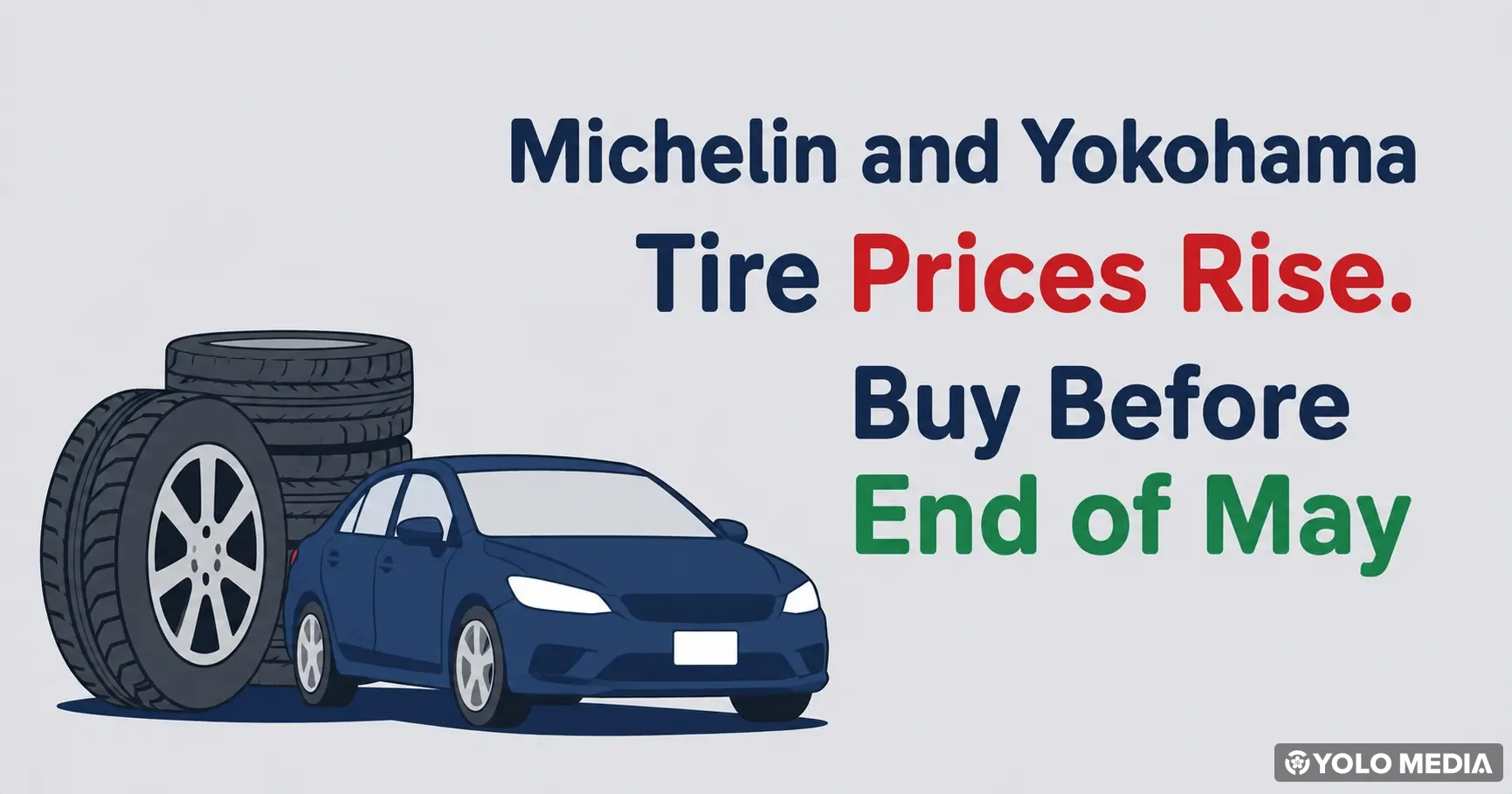
If you drive to work or use a car on weekends, here’s something worth knowing: Michelin and Yokohama Tire are raising their prices starting June 1, 2026. Your next tire replacement is about to get a bit more expensive.
The increase is 3–5%. For a tire that costs around 15,000 yen per unit, that works out to roughly 2,000–3,000 yen more for a full set of four. If you’ve been thinking about replacing your tires, doing it in May is the smarter move.


What You’ll Learn
- Michelin and Yokohama Tire are raising prices by 3–5% on June 1
- The increase mainly affects passenger car summer tires. Michelin’s winter tires go up in September
- Rising raw material and logistics costs are the main reasons
- Bridgestone has not announced a 2026 increase (they raised prices 6–8% in 2025)
- Buying before the end of May means you pay the current price
Disclaimer: This article is based on official press releases from each manufacturer as of April 2026. Actual prices vary by product and size.
What Changes on June 1
Here’s a side-by-side comparison of the two announcements.
| Manufacturer | Price Increase | Effective Date | Products Affected |
|---|---|---|---|
| Michelin | Average 3–5% | June 1, 2026 (summer tires) | Passenger cars, light trucks, motorcycles, trucks/buses, agricultural machinery, etc. |
| Yokohama Tire | Average 5% | June 1, 2026 | Passenger car and van summer tires |
(Source: Michelin Press Release)
(Source: Yokohama Tire Press Release)
Michelin’s increase covers a wide range, from passenger car tires to commercial and agricultural tires. Yokohama’s increase is focused on passenger car and van summer tires.
Both companies start the new pricing on June 1, 2026. Purchasing by May 31 means you pay the current price.
Why Are Prices Going Up?
The increases are driven by rising costs across manufacturing and distribution.
- Raw material prices: Natural rubber and synthetic rubber, the key ingredients in tires, have become more expensive
- Energy costs remaining high: Electricity and gas needed to run factories have stayed at elevated levels
- Logistics and labor costs: A shortage of truck drivers and higher fuel prices are pushing up shipping costs
- Geopolitical risks: Global instability is creating supply concerns and adding to fuel and transportation expenses
Michelin cites raw materials, energy prices, and geopolitical risks. Yokohama points to logistics, labor, and energy costs remaining at high levels.
(Source: Michelin Press Release)
(Source: Yokohama Tire Press Release)
This isn’t limited to just these two companies. Cost pressures are affecting the entire industry. Bridgestone already raised prices by 6–8% in June 2025.
(Source: Bridgestone Press Release)
What About Winter Tires?
Michelin has announced that winter tire (studless tire) prices will increase starting September 1, 2026. The increase is the same 3–5% range as summer tires.
(Source: Michelin Press Release)
Yokohama has not mentioned winter tires in this announcement. Bridgestone has not announced any additional 2026 increases either.
If you live in a snowy region like Hokkaido or Tohoku, it’s worth keeping an eye on winter tire pricing updates in the coming months.
Winter tire demand spikes in autumn, and stock can run low. If you’re considering Michelin winter tires, buying before the September price increase (i.e., in August) is one option.
What Car Owners Can Do Now
1. Buy Your Tires in May
Even if you don’t need a replacement right away, buying in May locks in the current price if you know a change is coming soon. After June 1, prices go up.
2. Compare Quotes from Multiple Shops
Check prices at car accessory stores (Autobacs, Yellow Hat, etc.), tire specialty shops, and online retailers. The same tire can differ by several thousand yen depending on where you buy.
3. Consider a Tire Storage Service
If you swap between summer and winter tires, car accessory stores and gas stations offer tire storage services (taiya hokan saabisu). This saves space at home and helps prevent tire deterioration.
4. Extend Tire Life with Regular Rotation
Rotating your tires (swapping front and rear positions) evens out wear and extends their lifespan. A good rule of thumb is to rotate every 5,000–10,000 km.
FAQ
Q. Are all tire brands raising prices?
A. As of now, only Michelin and Yokohama Tire have announced increases effective June 1. Bridgestone raised prices in 2025 and has not announced a further 2026 increase. Other manufacturers may follow, so check the latest information before purchasing.
Q. Can I buy tires online and have them installed somewhere?
A. Yes. Many car accessory stores and tire shops accept tires purchased elsewhere for installation. Some online retailers also offer direct shipping to partner shops. Installation typically costs around 1,500–3,000 yen per tire.
Q. How long can I keep tires I bought before the price increase?
A. Unused tires stored properly can generally be used for about 4–5 years from the manufacturing date. Keep them away from direct sunlight and high temperatures, and store them in a cool place.
Q. Are kei-car (light vehicle) tires affected too?
A. Yes. The increase applies to passenger car tires, which includes the sizes used on kei cars (kei-jidousha).
If you want to review what your car or your household really costs each year, take a look at these guides too:
- Complete guide to the cost of owning a car in Japan: how much taxes, shaken inspections, insurance, and parking really add up to per year
- Cost of living in Japan guide: monthly budget benchmarks for singles and families, plus tips to save
- May’s electricity and gas price increases: what’s behind this month’s utility hikes and how to cut back
Key Takeaways
- ✅ Michelin (3–5%) and Yokohama Tire (5%) are raising prices on June 1. If you need new tires, buy before the end of May
- ✅ Michelin’s winter tires go up September 1. Plan ahead if you live in a snowy area
- ✅ Comparing quotes across multiple shops can save you several thousand yen
- ✅ Regular tire rotation extends tire life and delays your next purchase
Tires are a safety-critical part of your car, so don’t rush the decision just because of a price hike. Pick what actually fits your car and driving style. Take a moment in May to check the tread depth and production date of your current tires, and act early if a replacement looks close.